
A Polka-Dot Playground for the Design-Obsessed
A year ago, during a trip to Melbourne, I stepped into another universe.
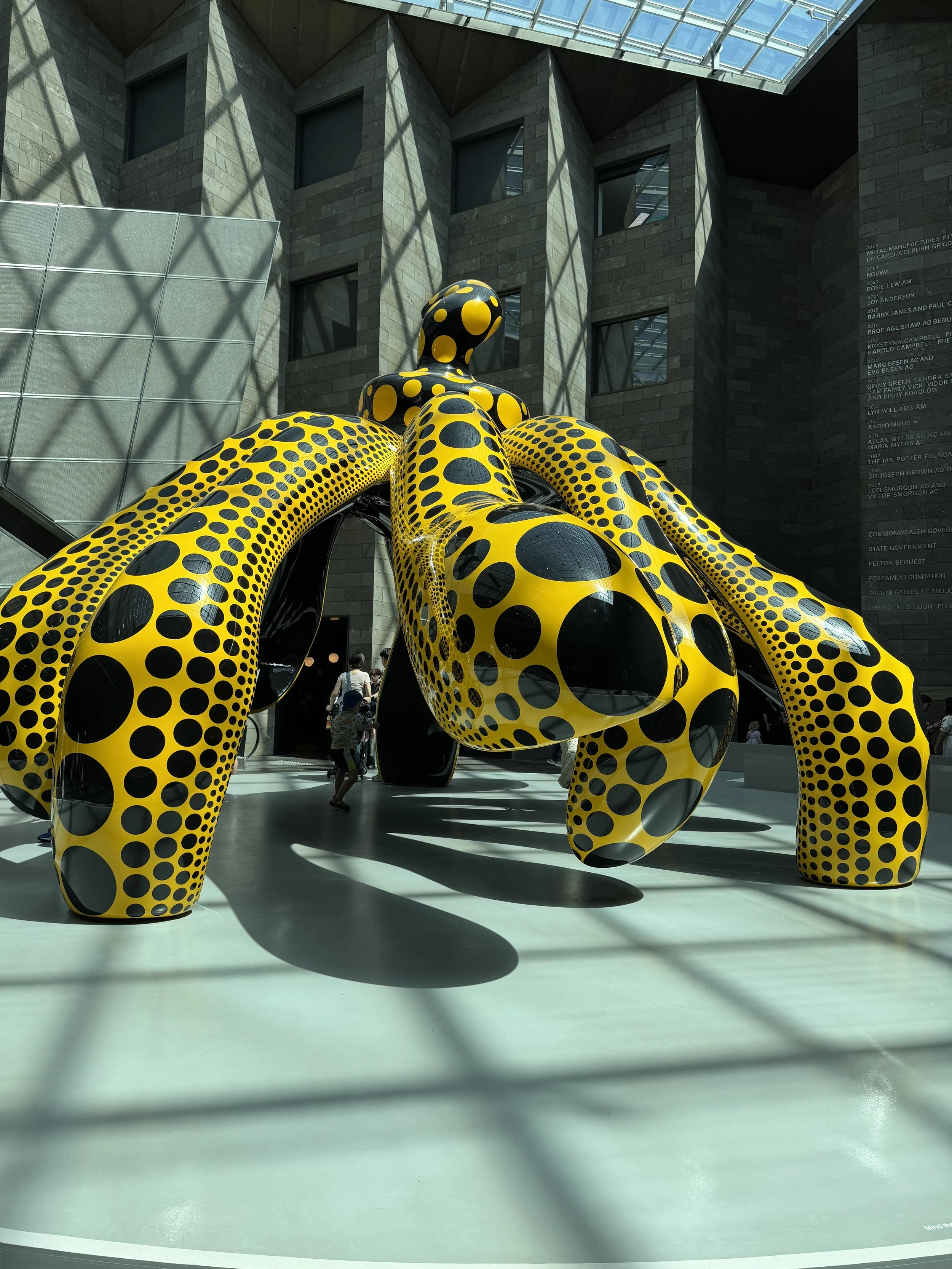
Not metaphorically, but quite literally—inside the mirrored, mind-bending, joyfully obsessive world of Yayoi Kusama at the NGV. It wasn’t merely an exhibition; it was a fully immersive experience.
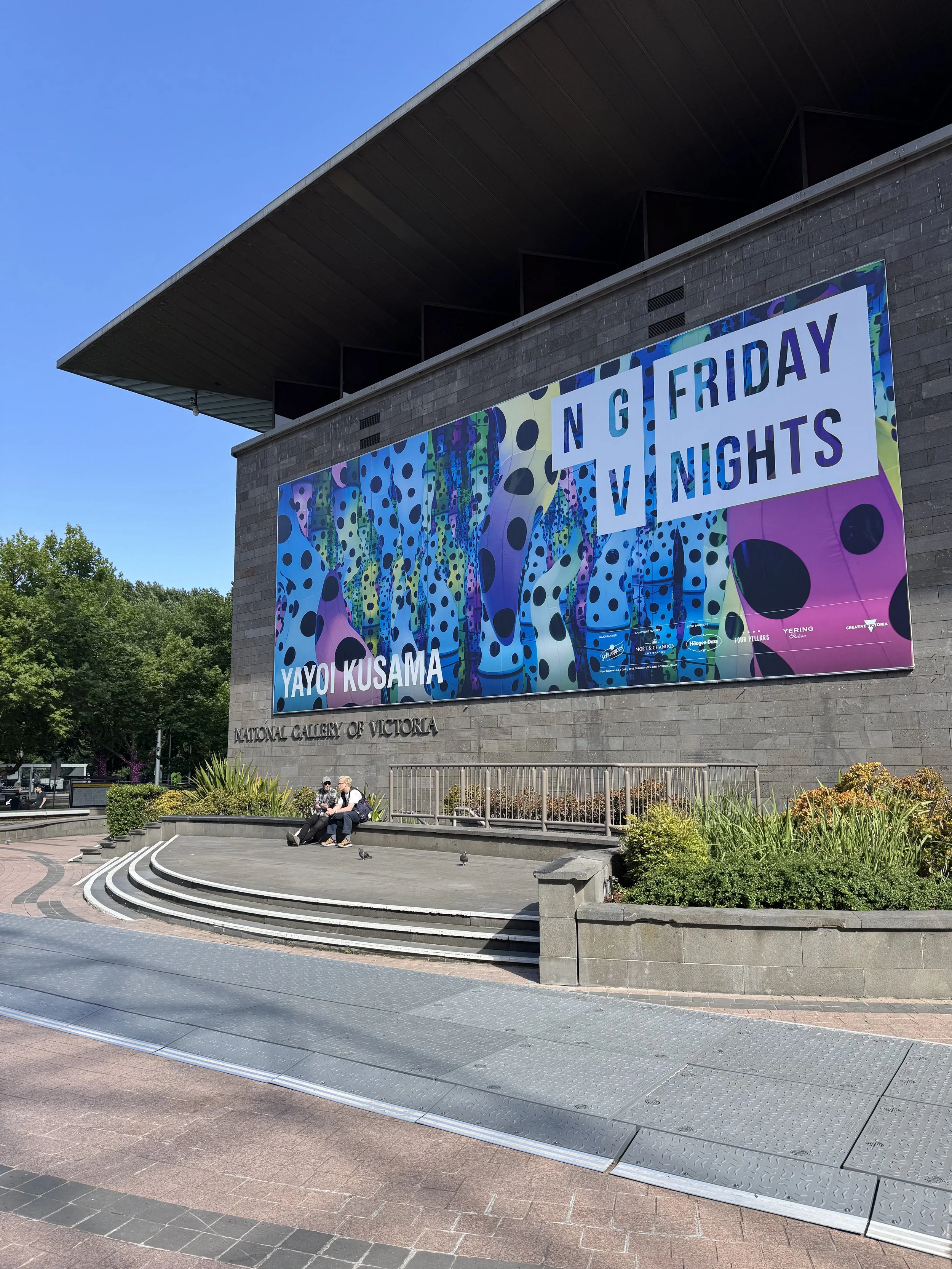
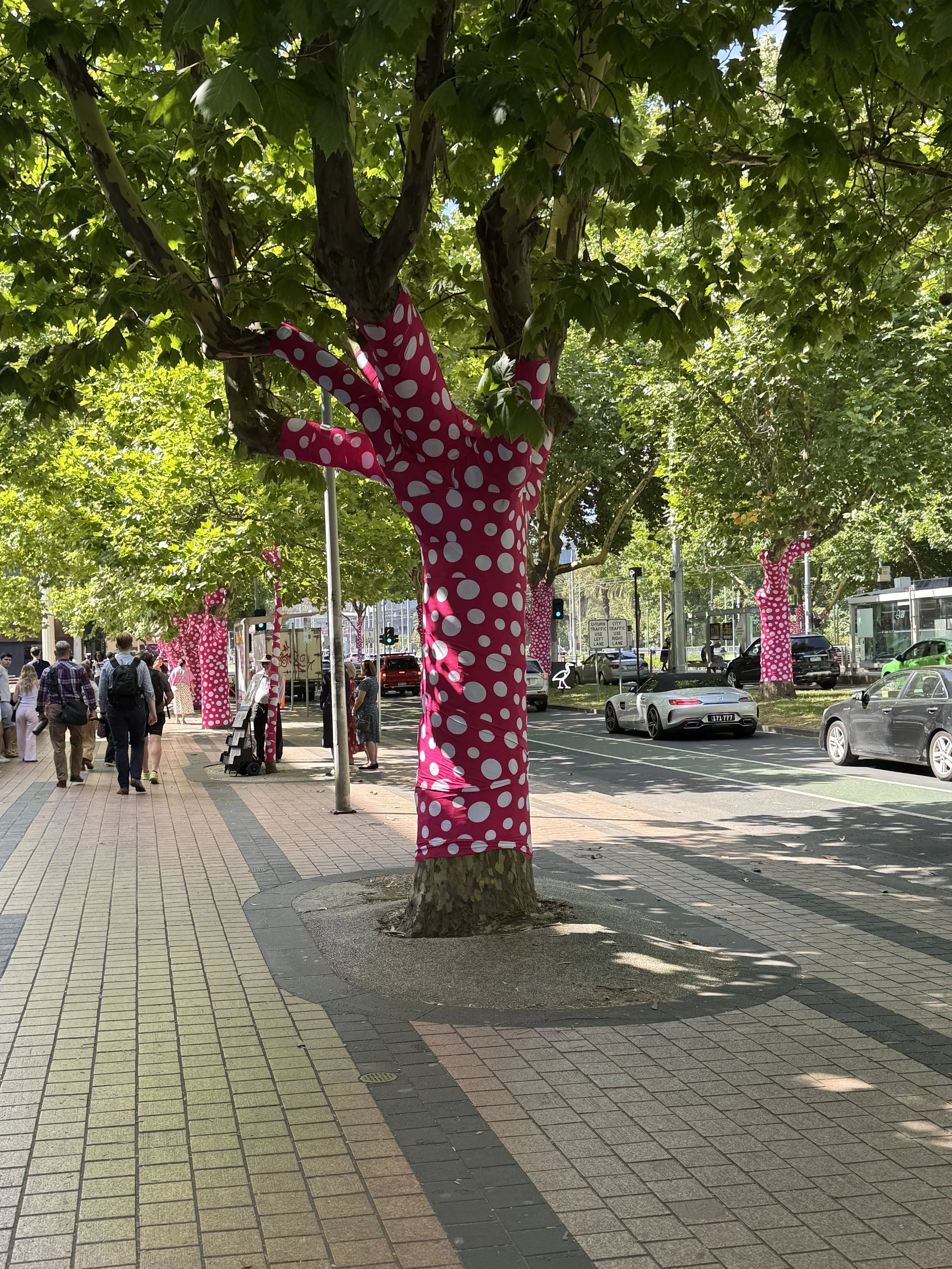
Stepping Into Kusama’s Head (and Loving It)
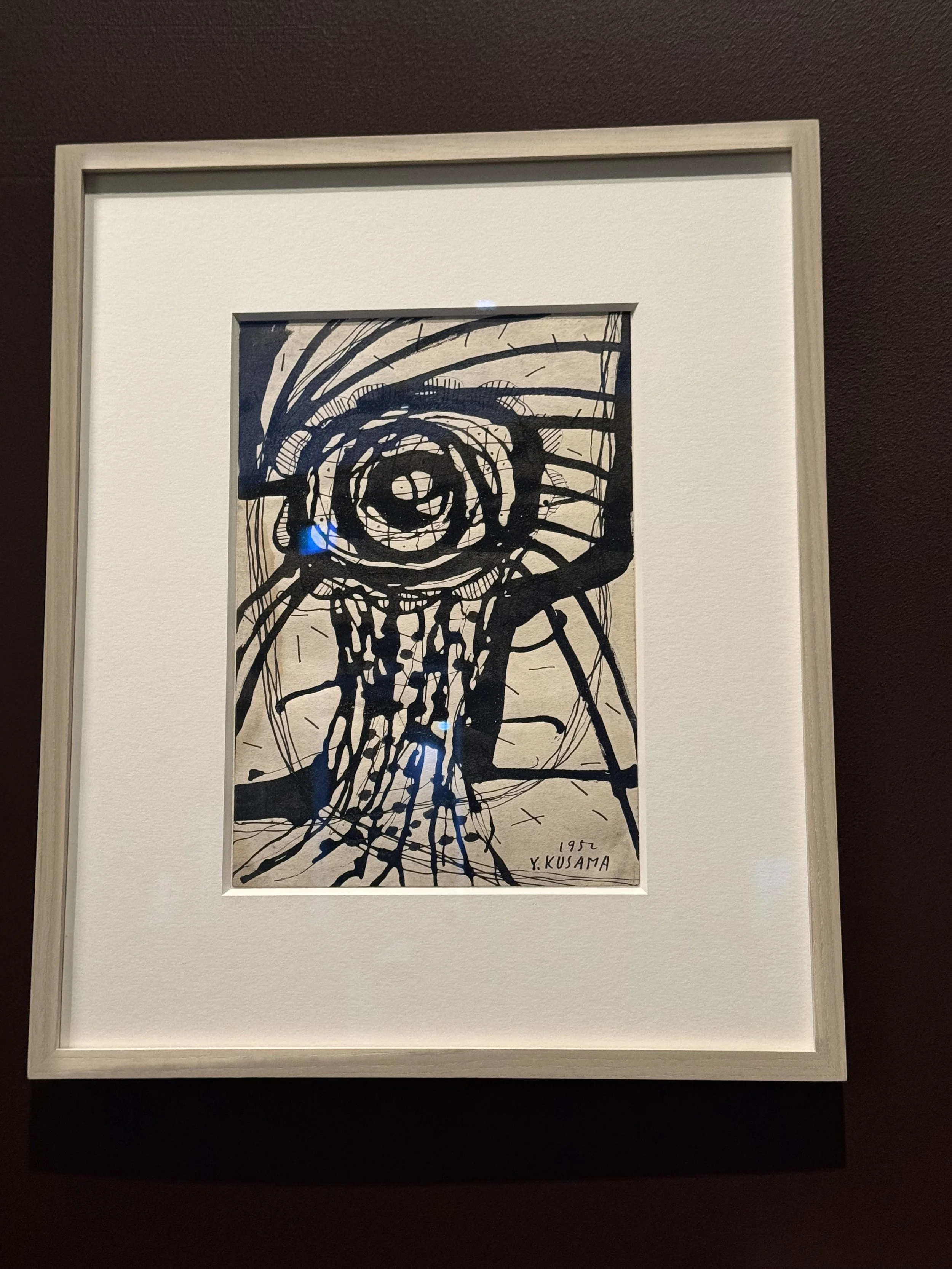
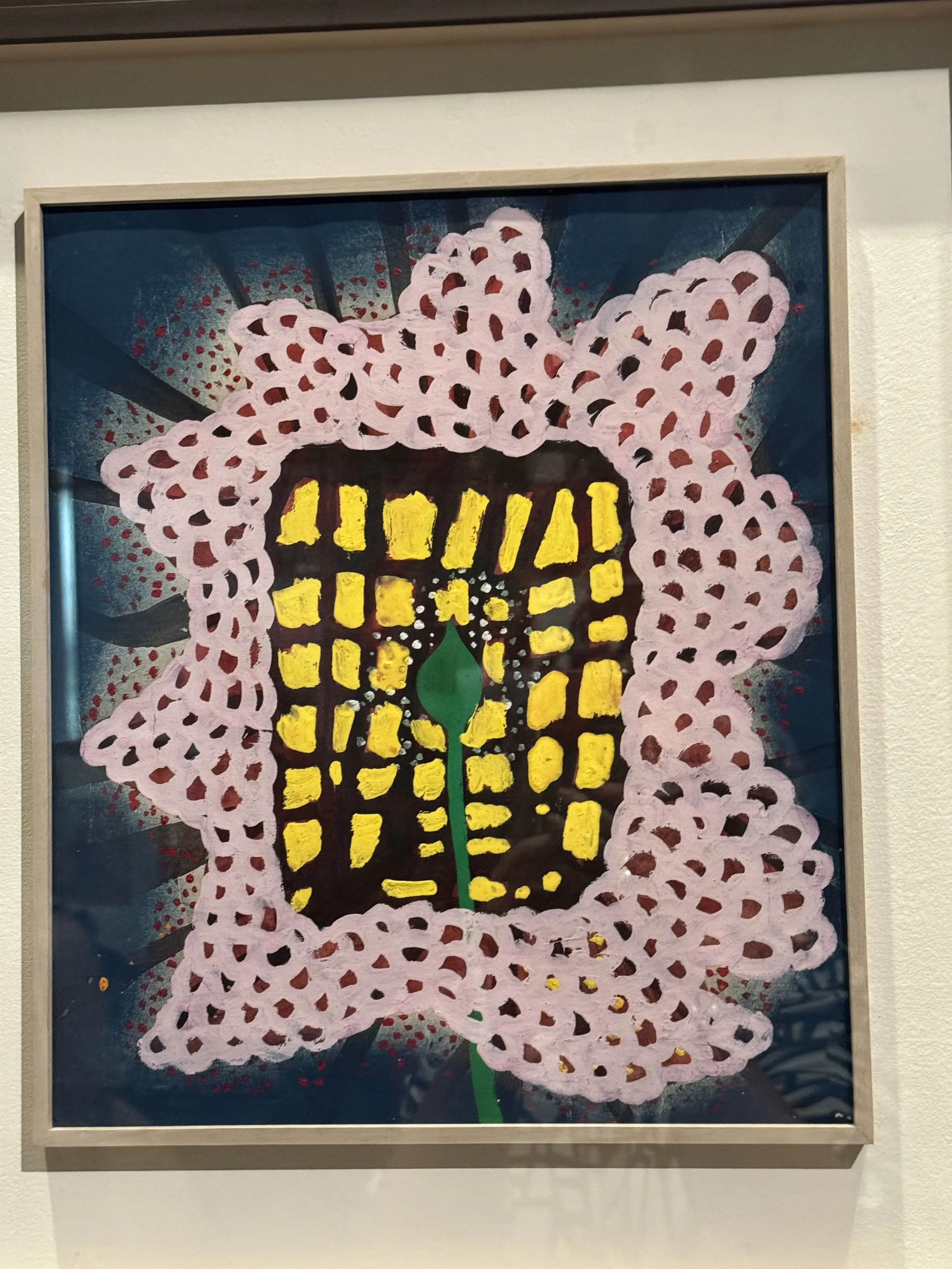
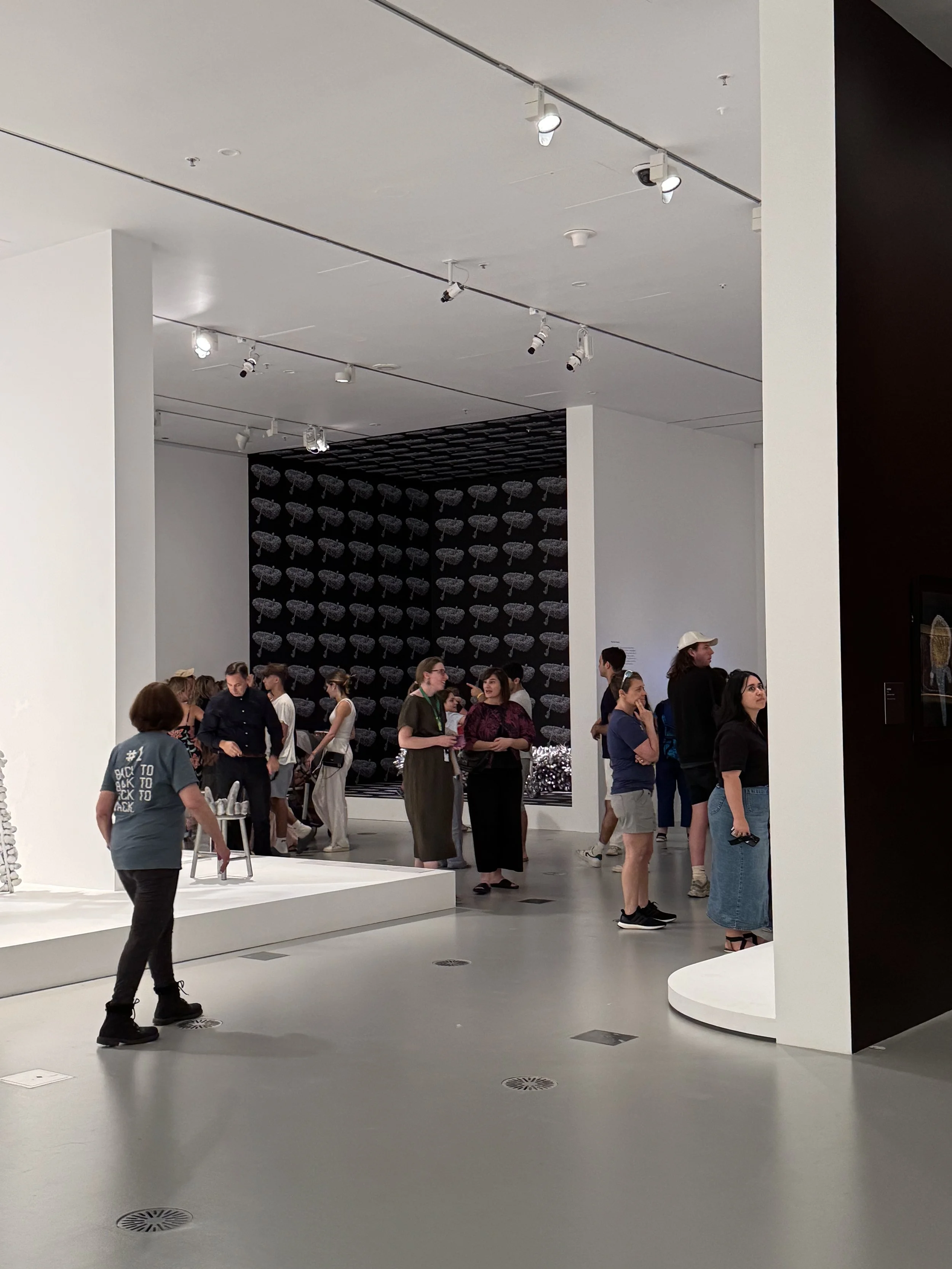
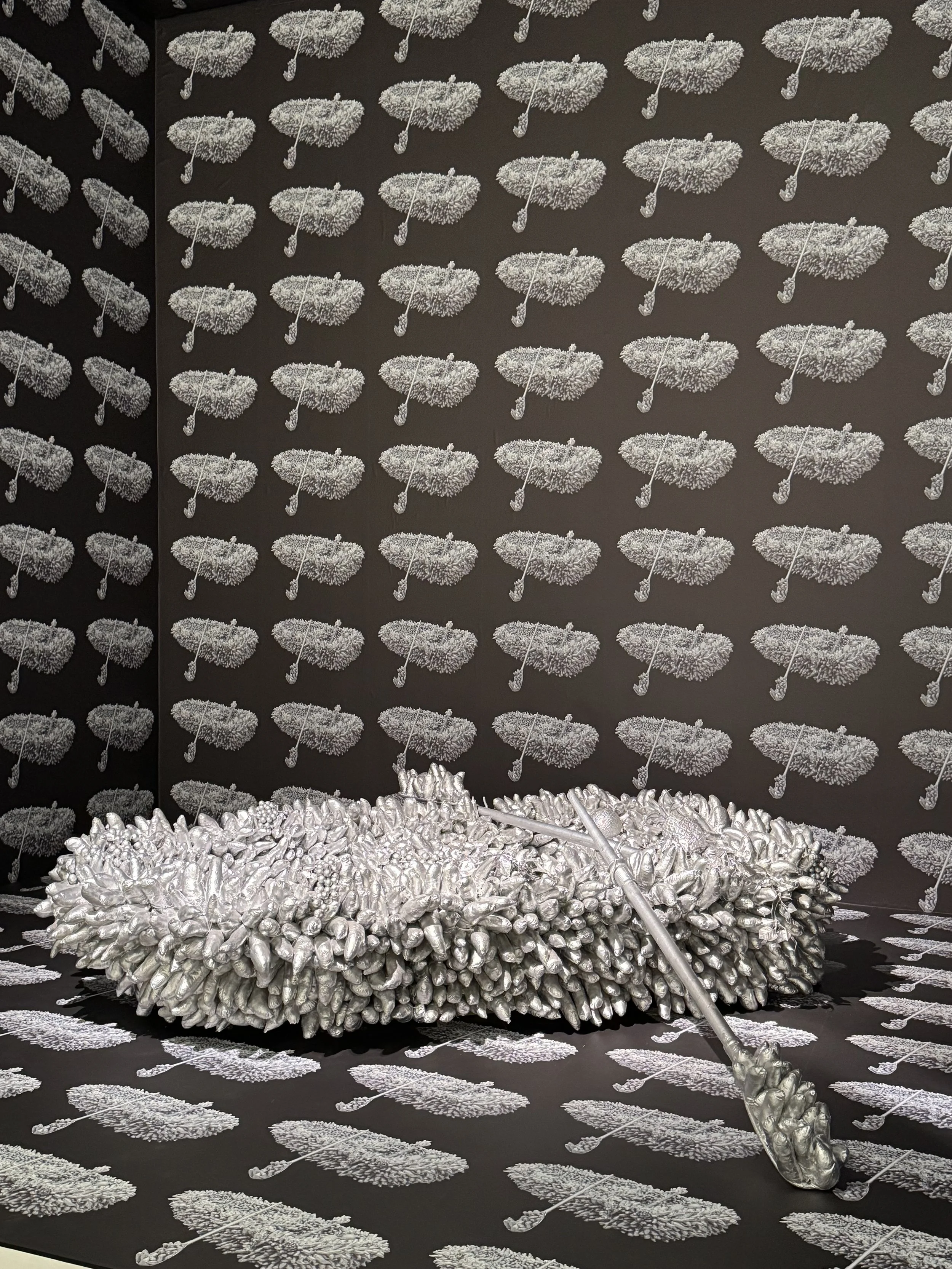
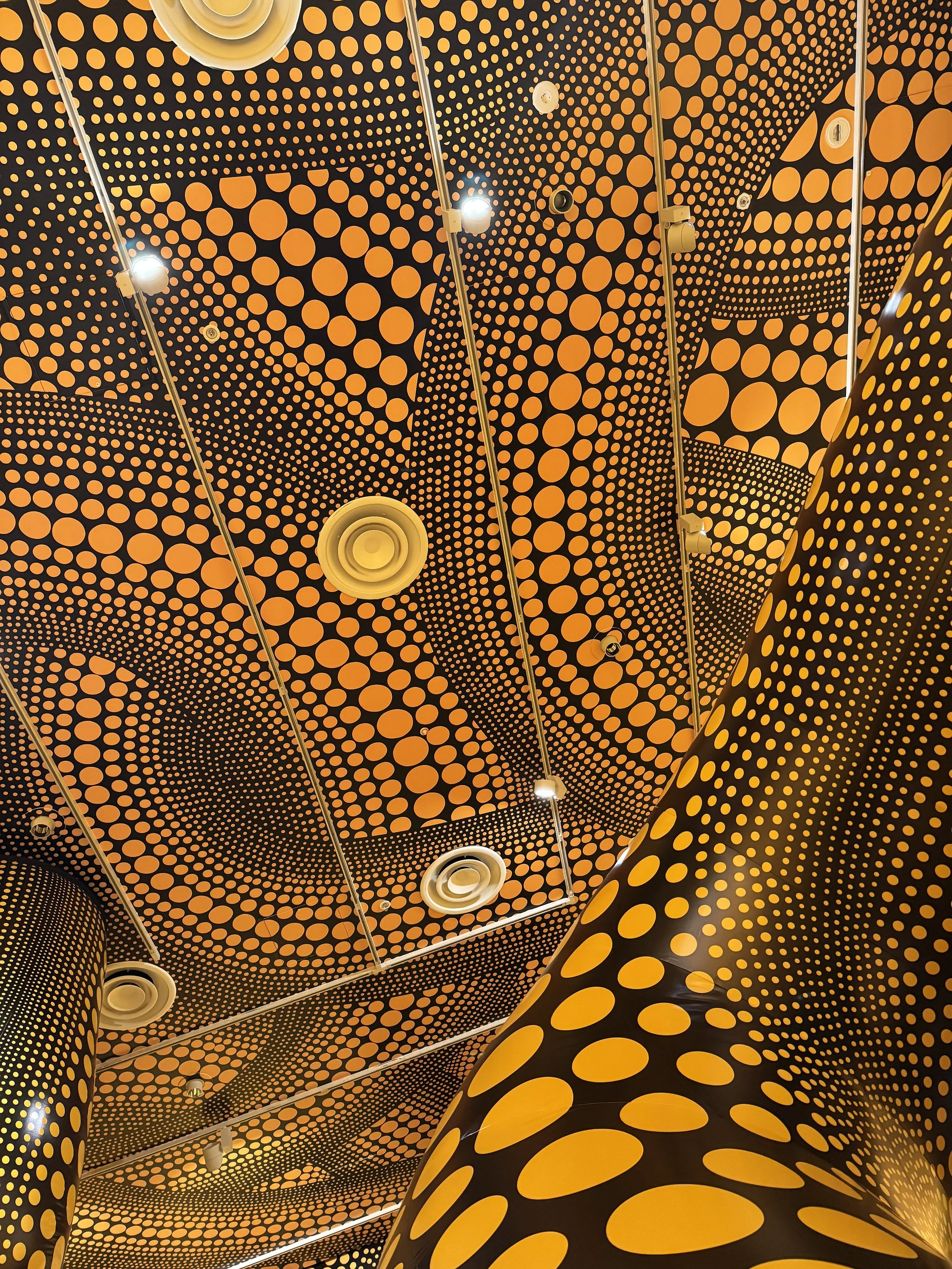
From the moment I walked in, I was swallowed by dots, mirrors, lights, pumpkins, and a sort of playful madness that somehow felt… grounding? The NGV didn’t just showcase art—they transformed the space into a Kusama dreamscape. It was a total sensory takeover, and as an interior designer, I was living for the drama, scale, and unapologetic boldness.
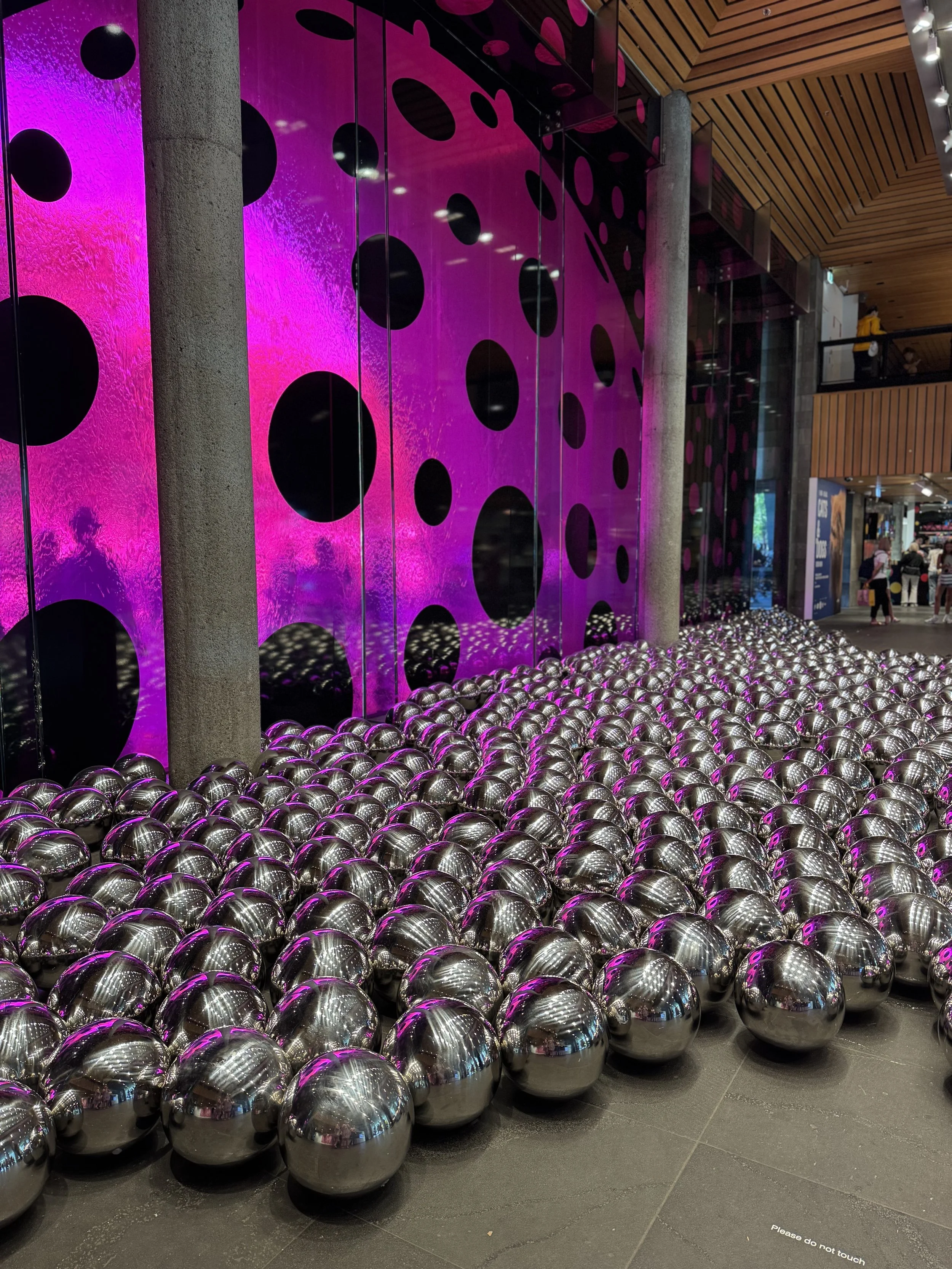
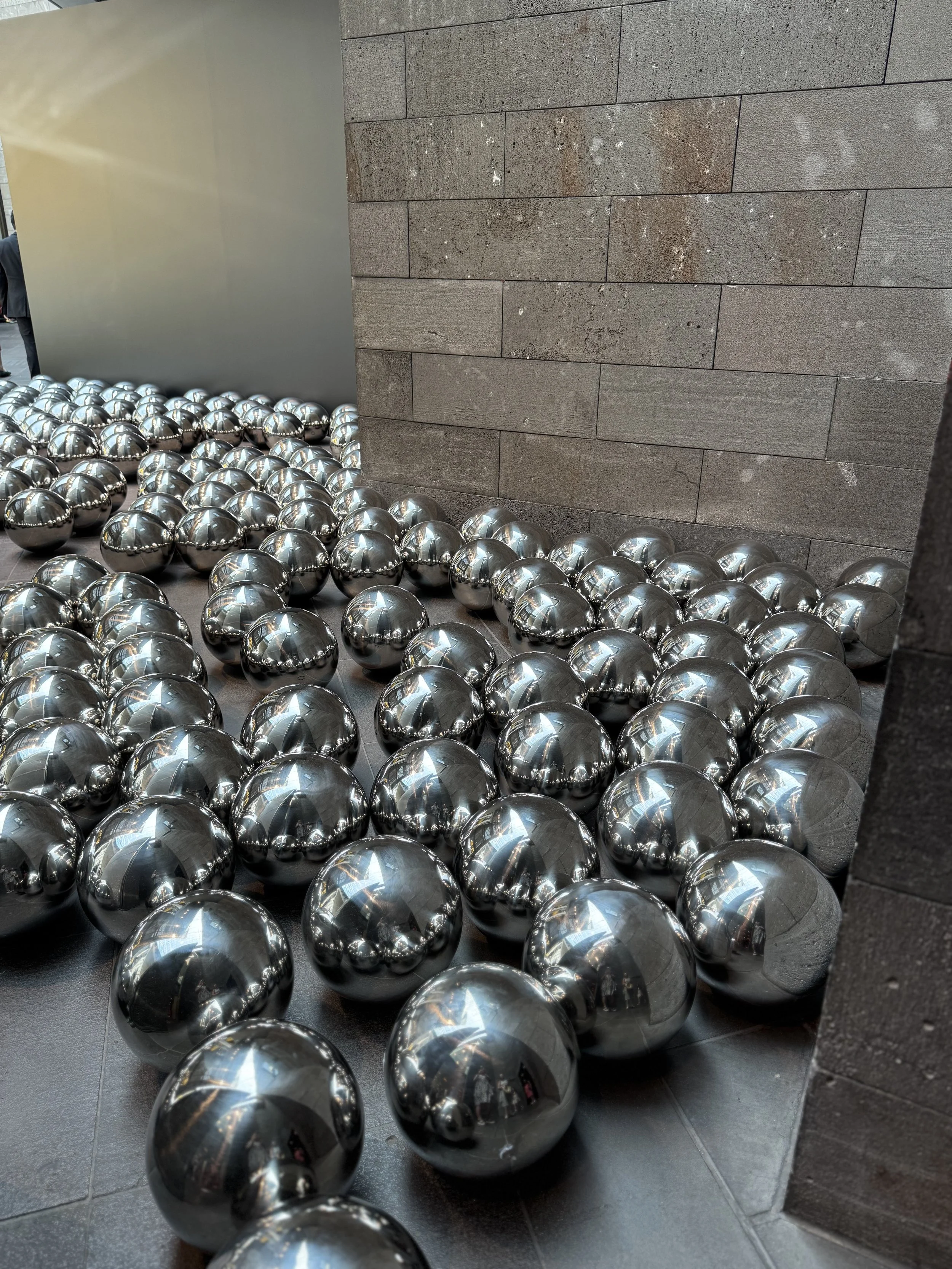
A Life Woven in Polka Dots
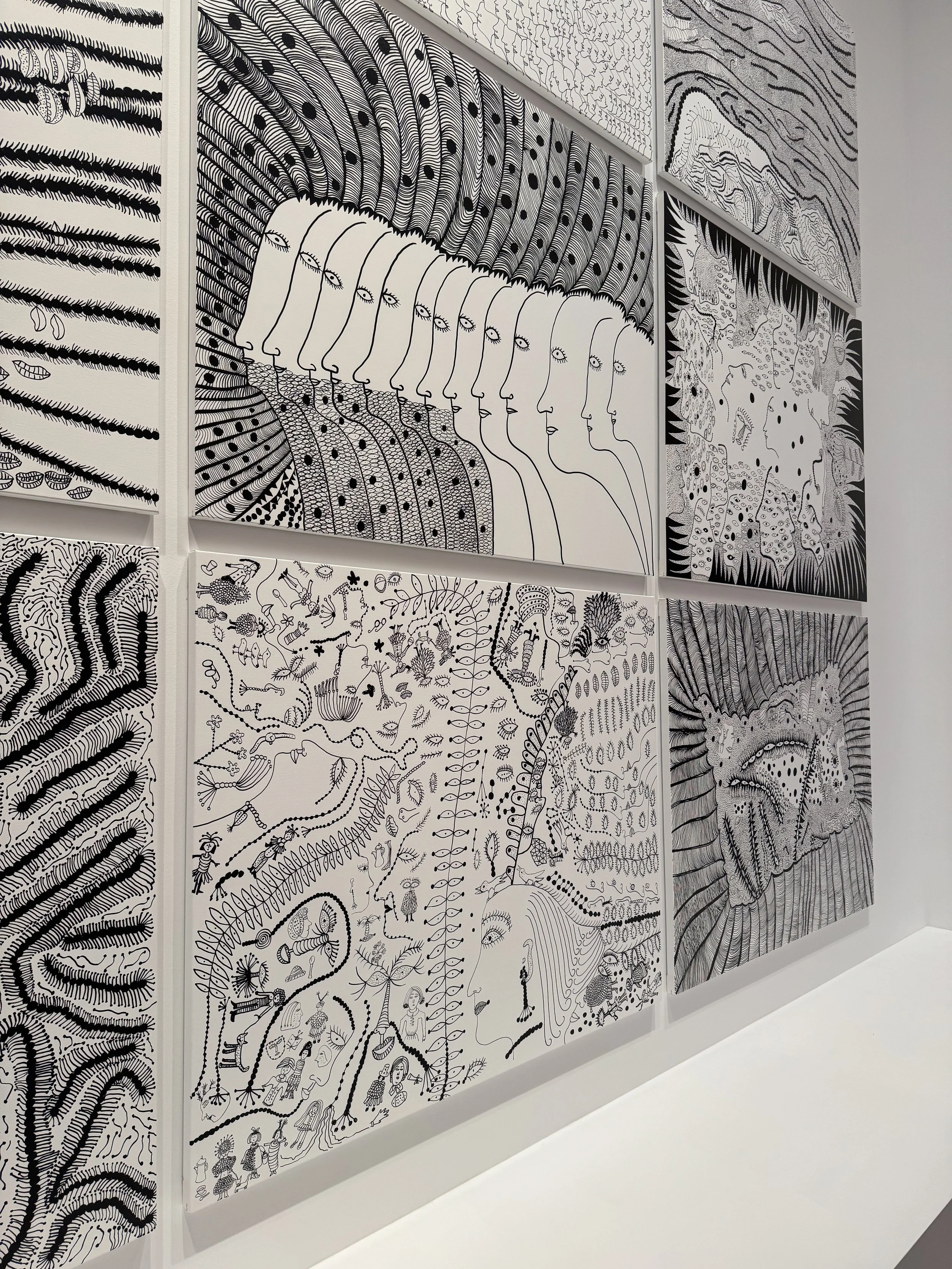
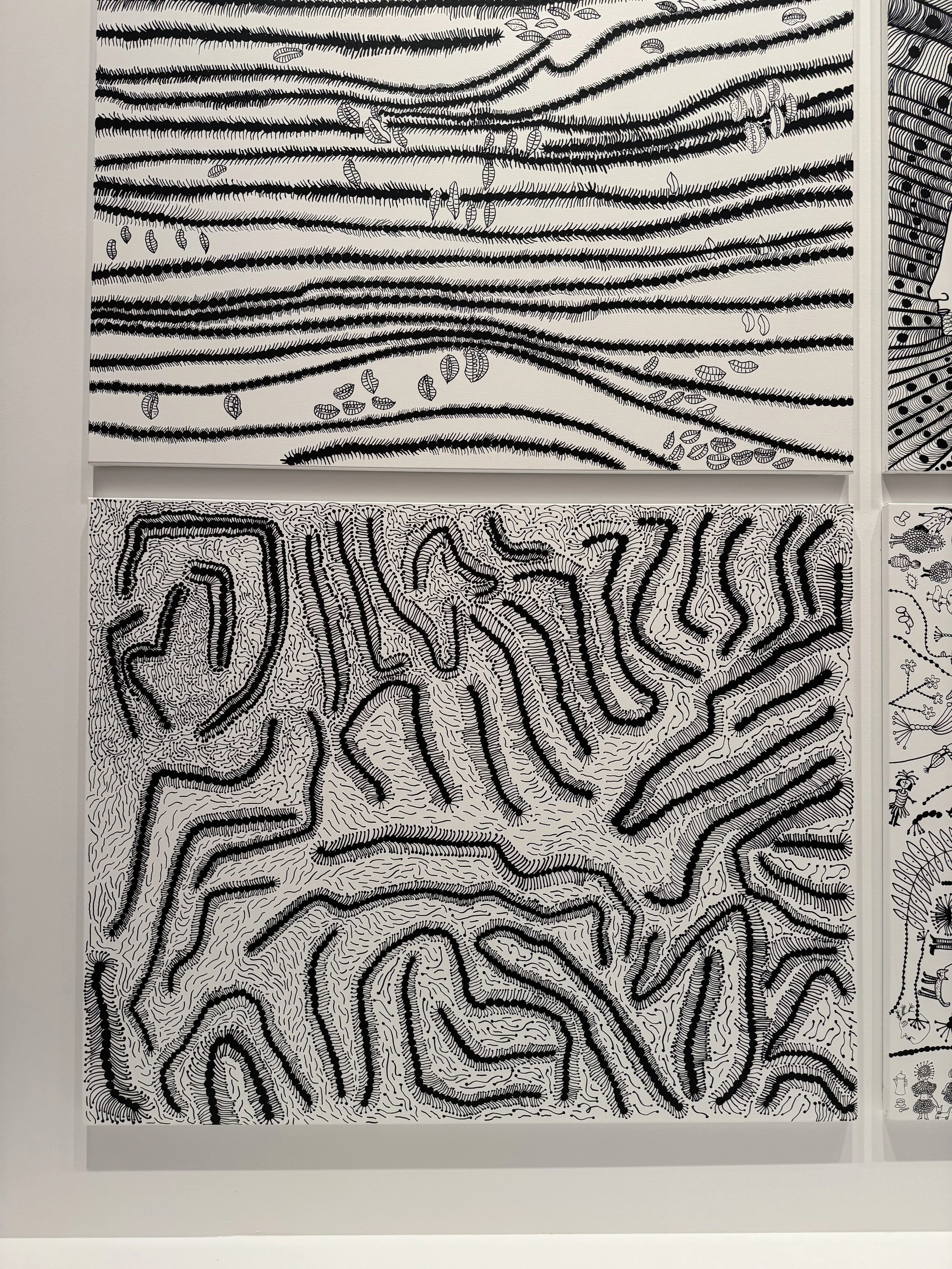
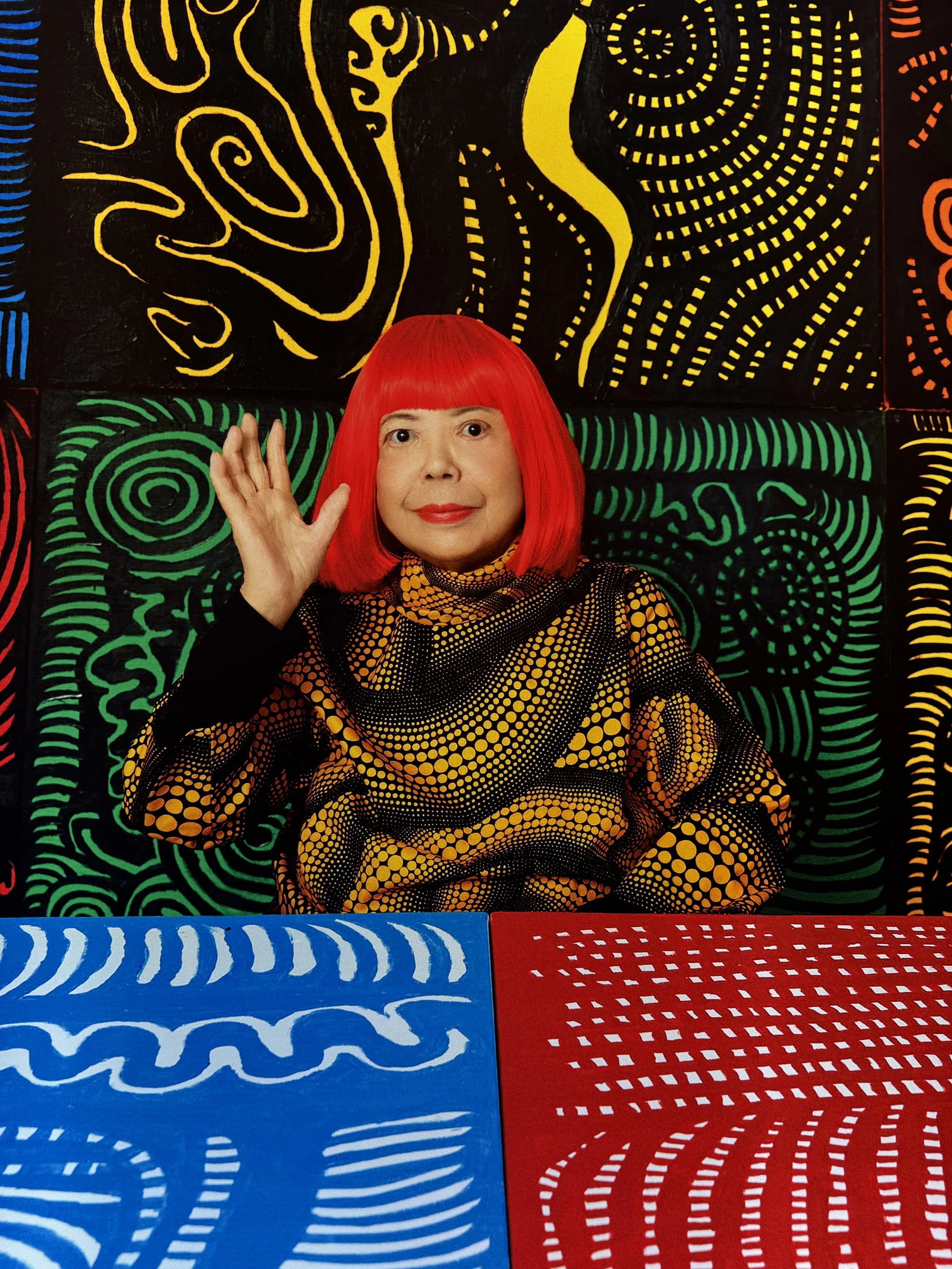
Born in 1929 in Matsumoto, Japan, Kusama began drawing as a child, often haunted by vivid hallucinations that would later define her art. Polka dots, nets, pumpkins, and mirrors became her visual language—tools to navigate both trauma and transcendence. These motifs, especially the ubiquitous dot, are more than just aesthetic choices. To Kusama, they represent the infinite, the cosmos, and the obliteration of the ego.
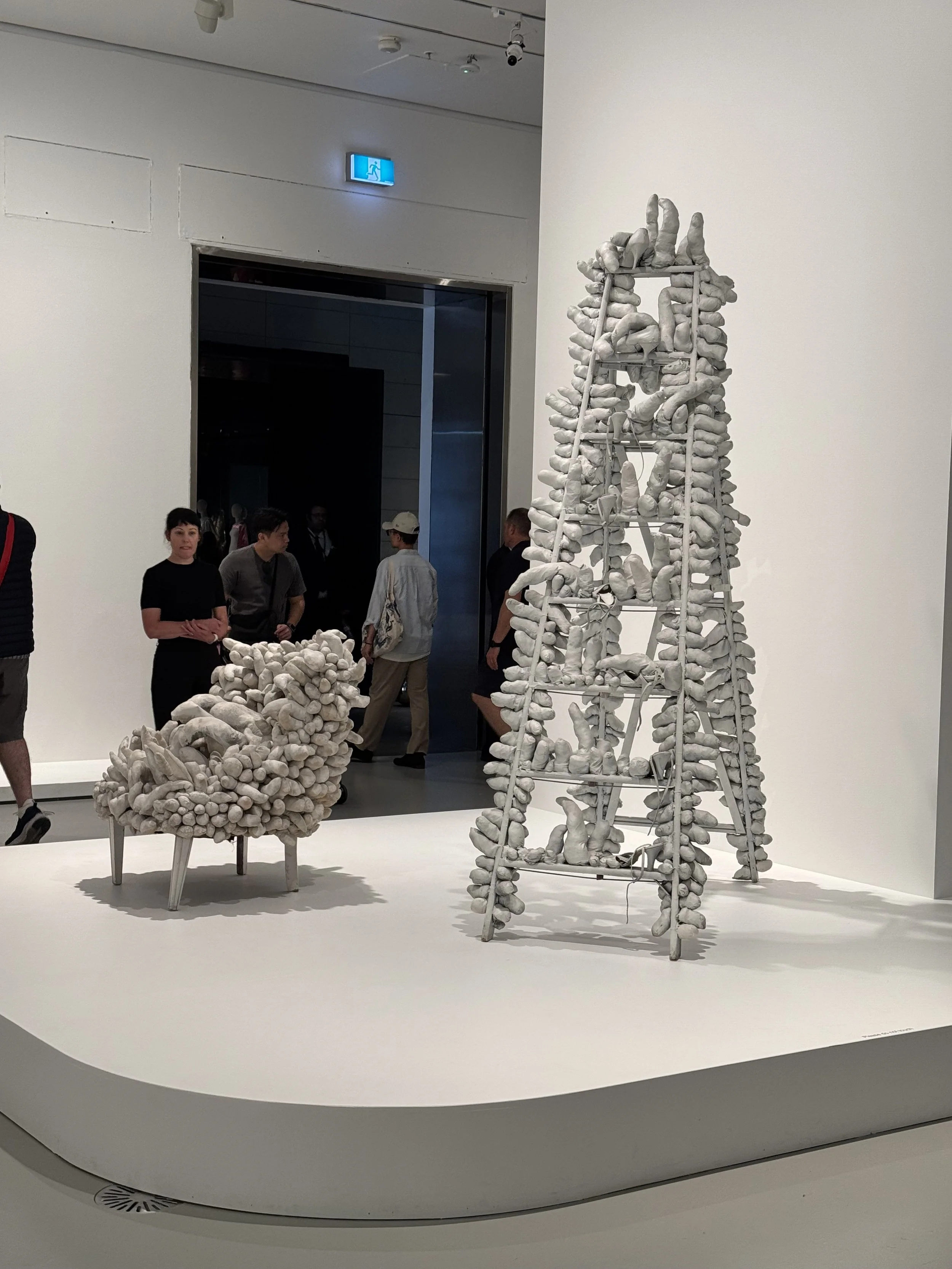
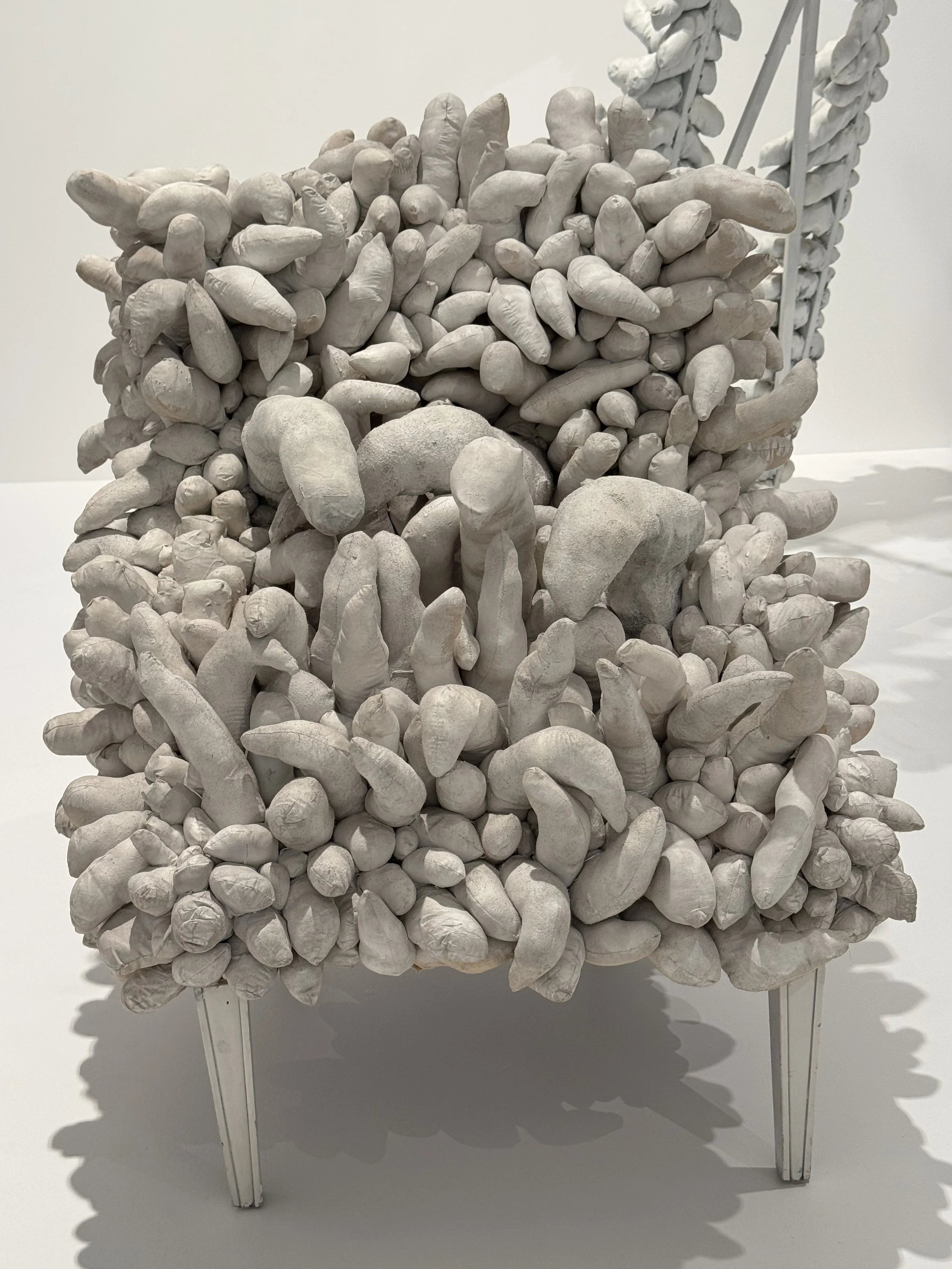
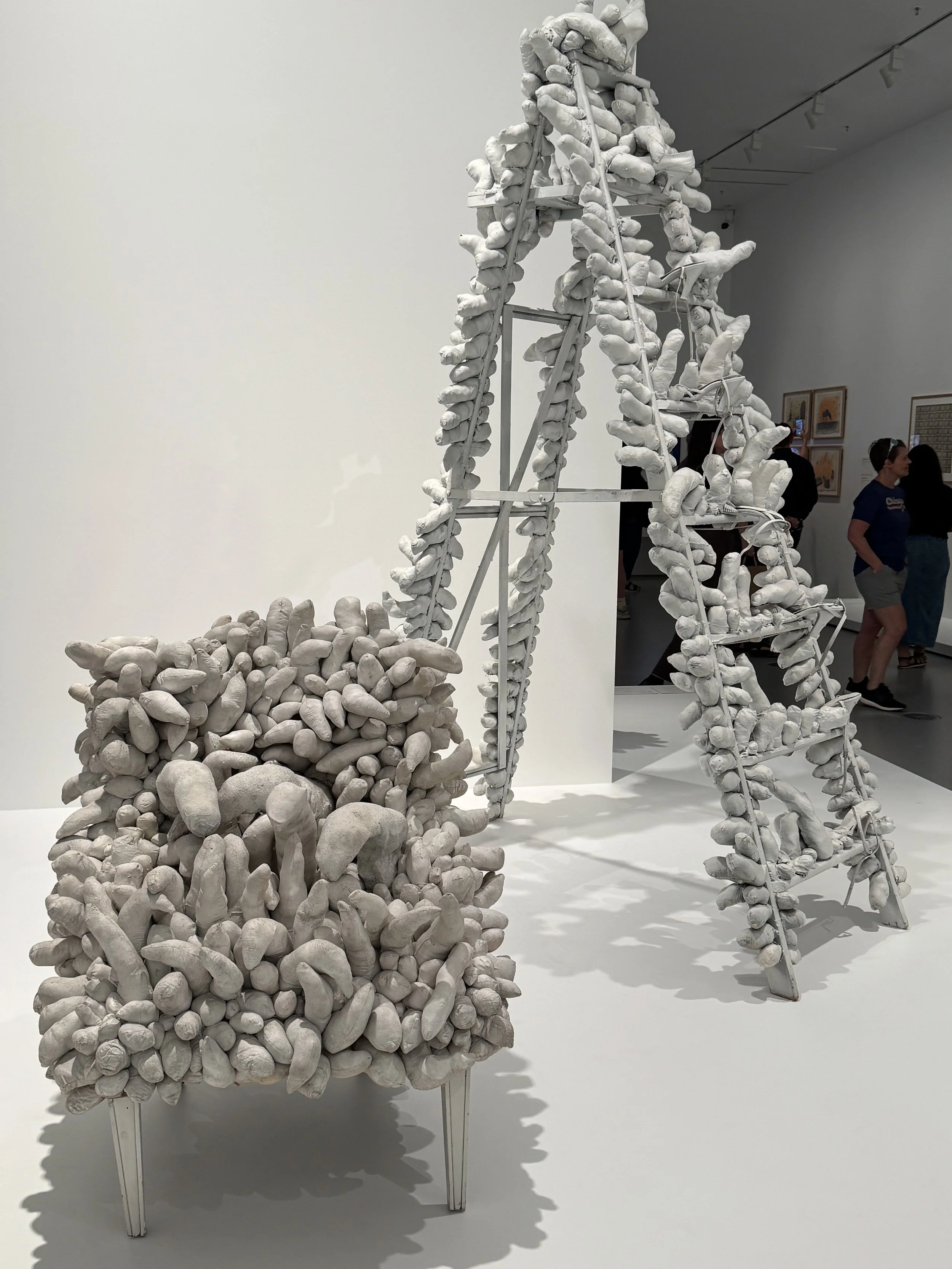
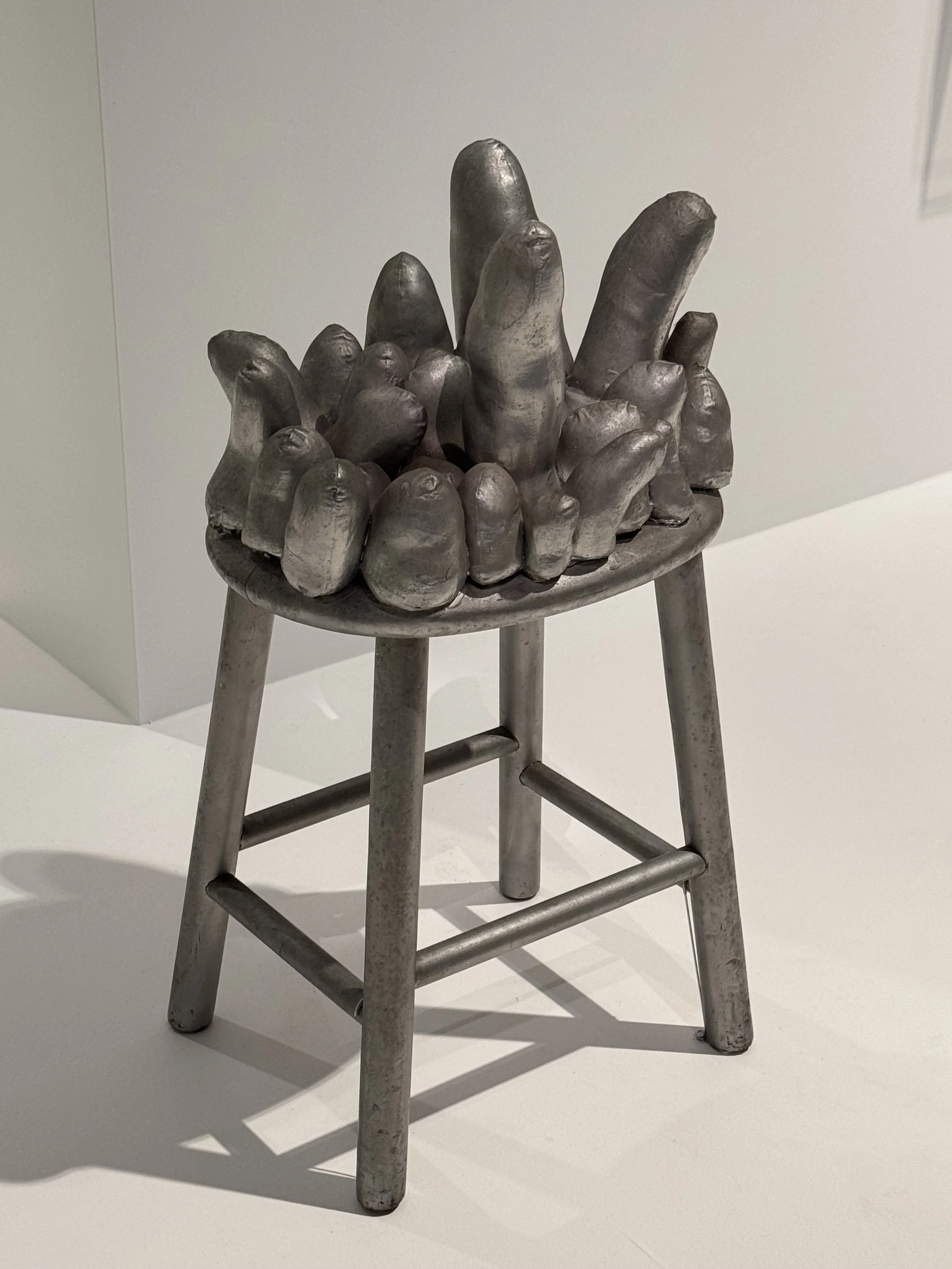
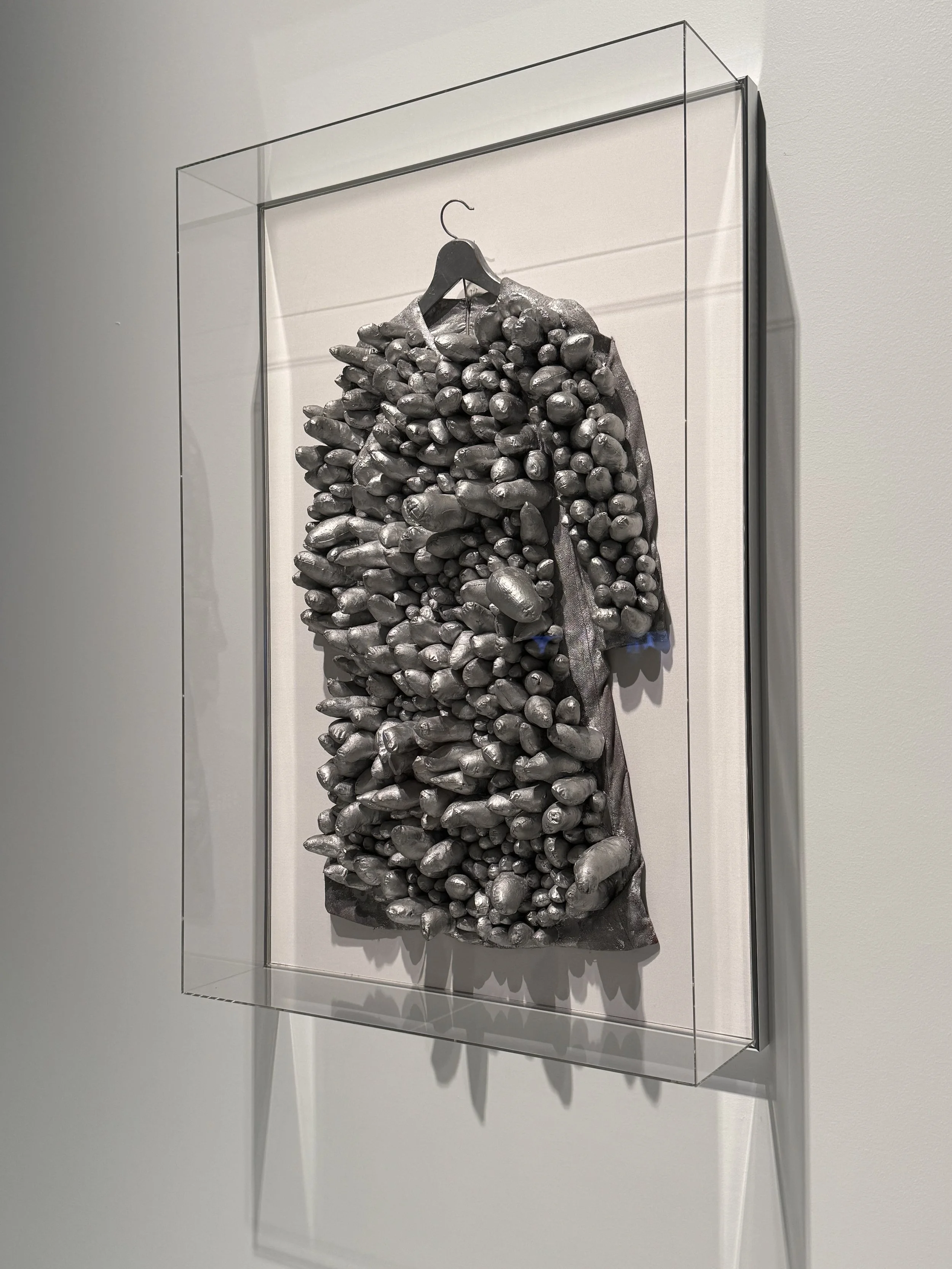
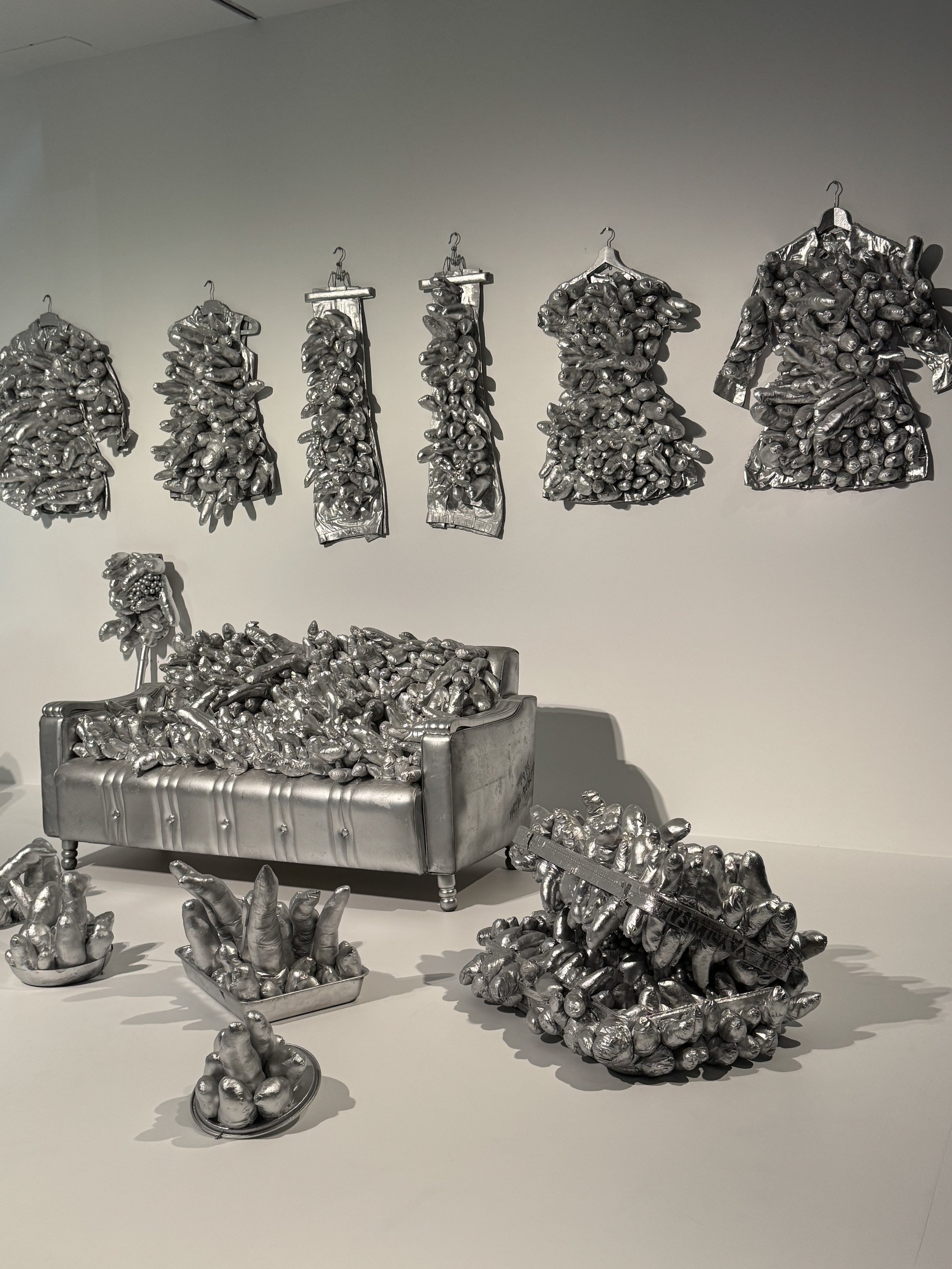
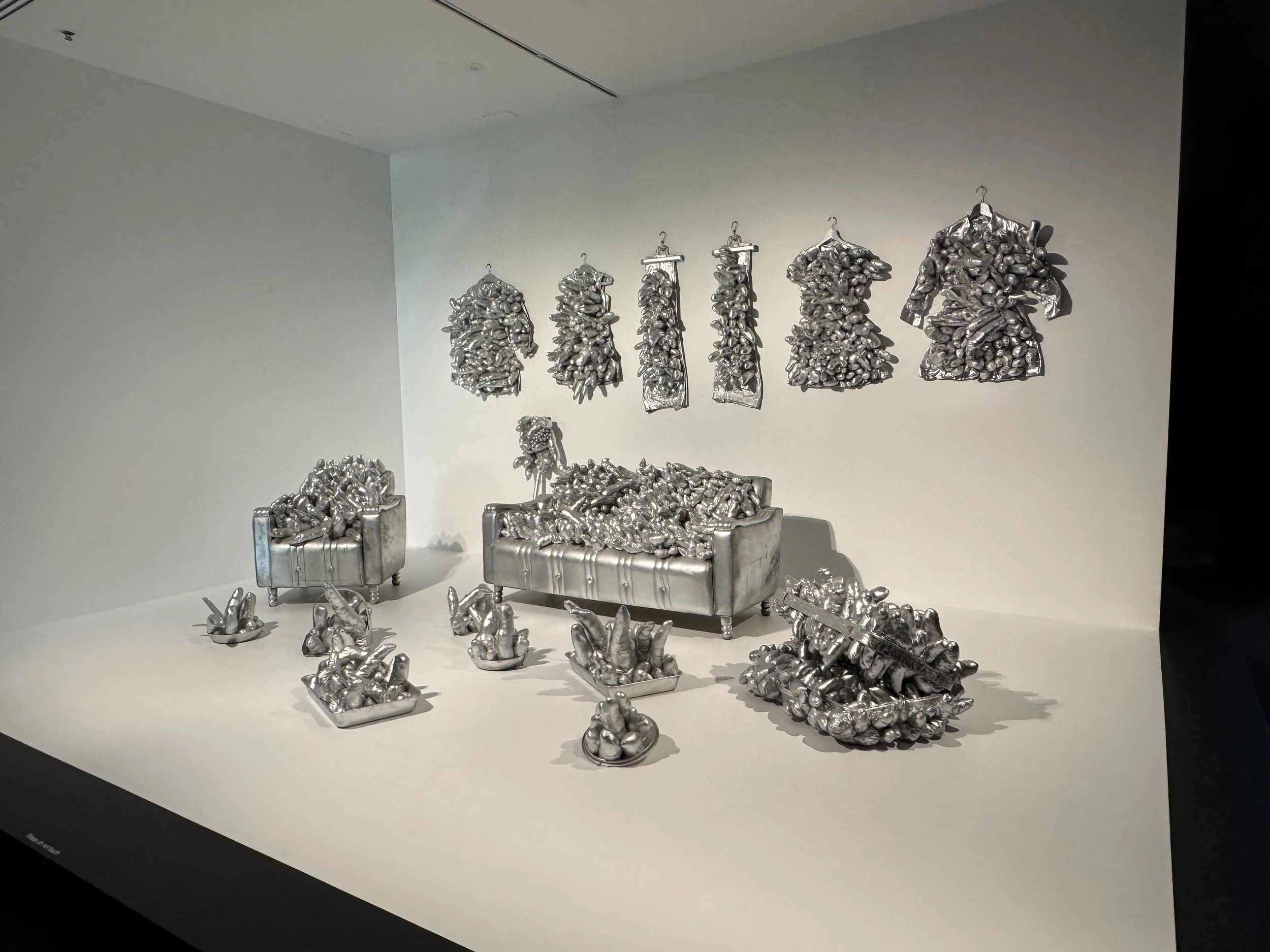
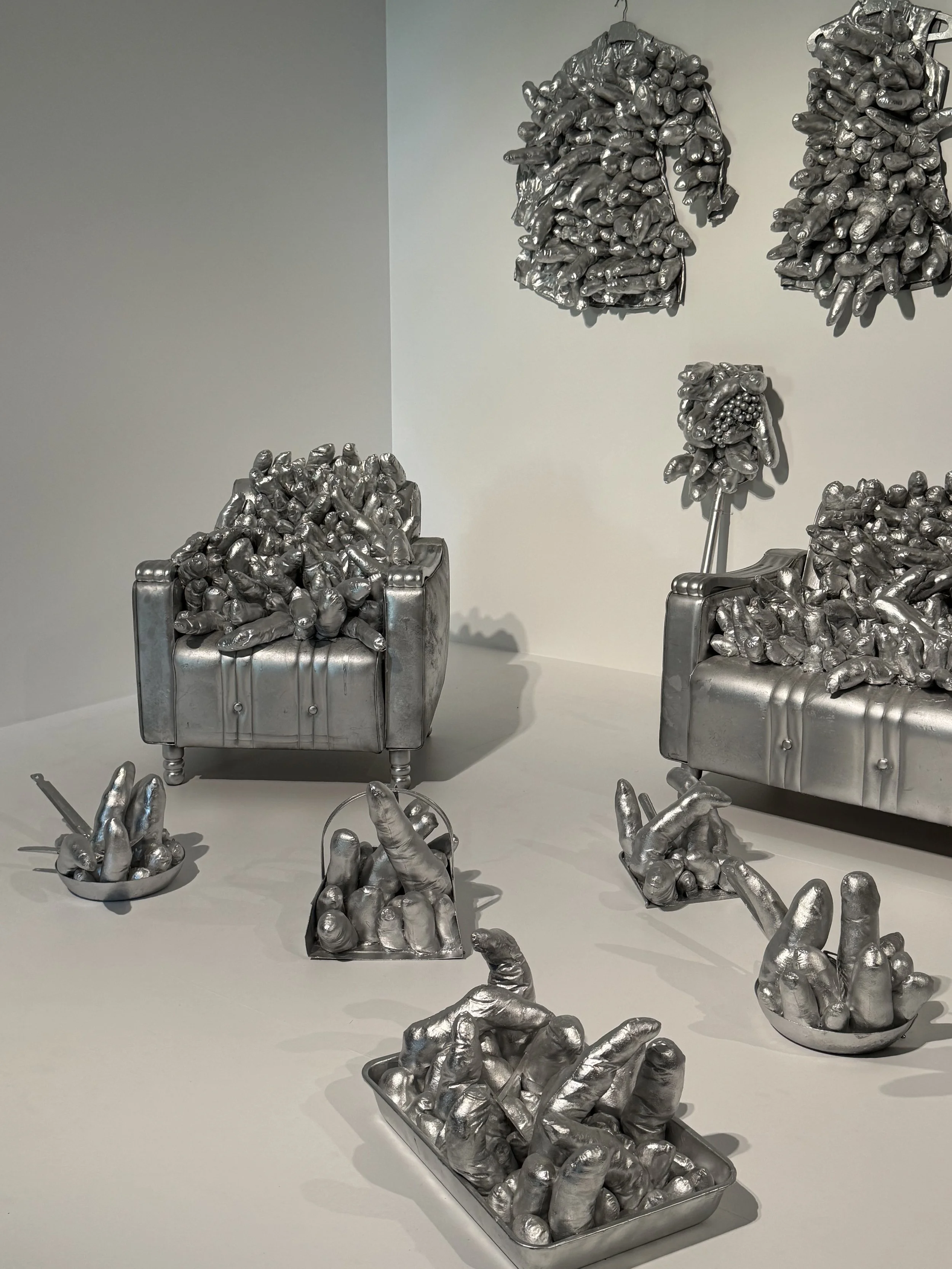
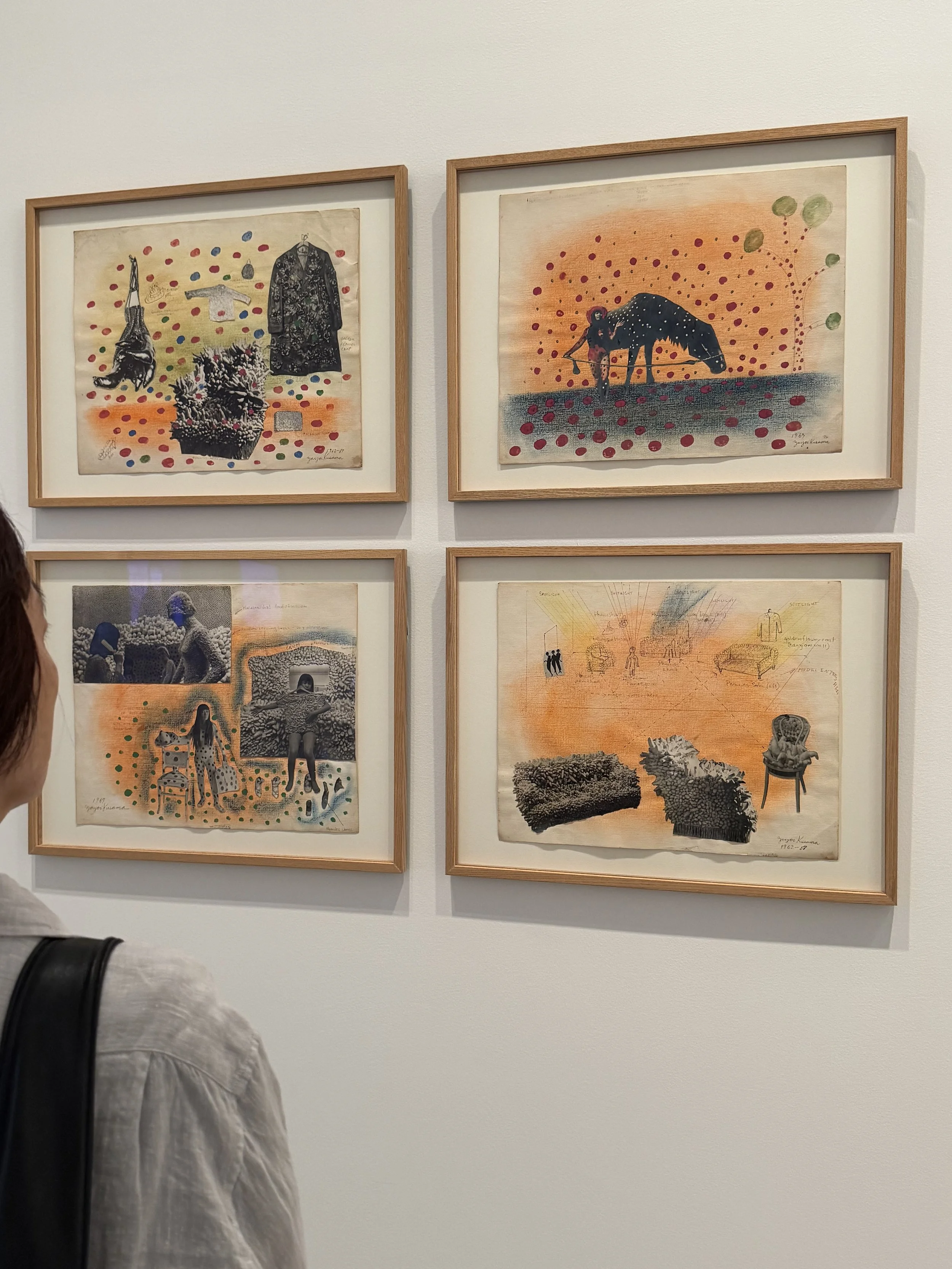
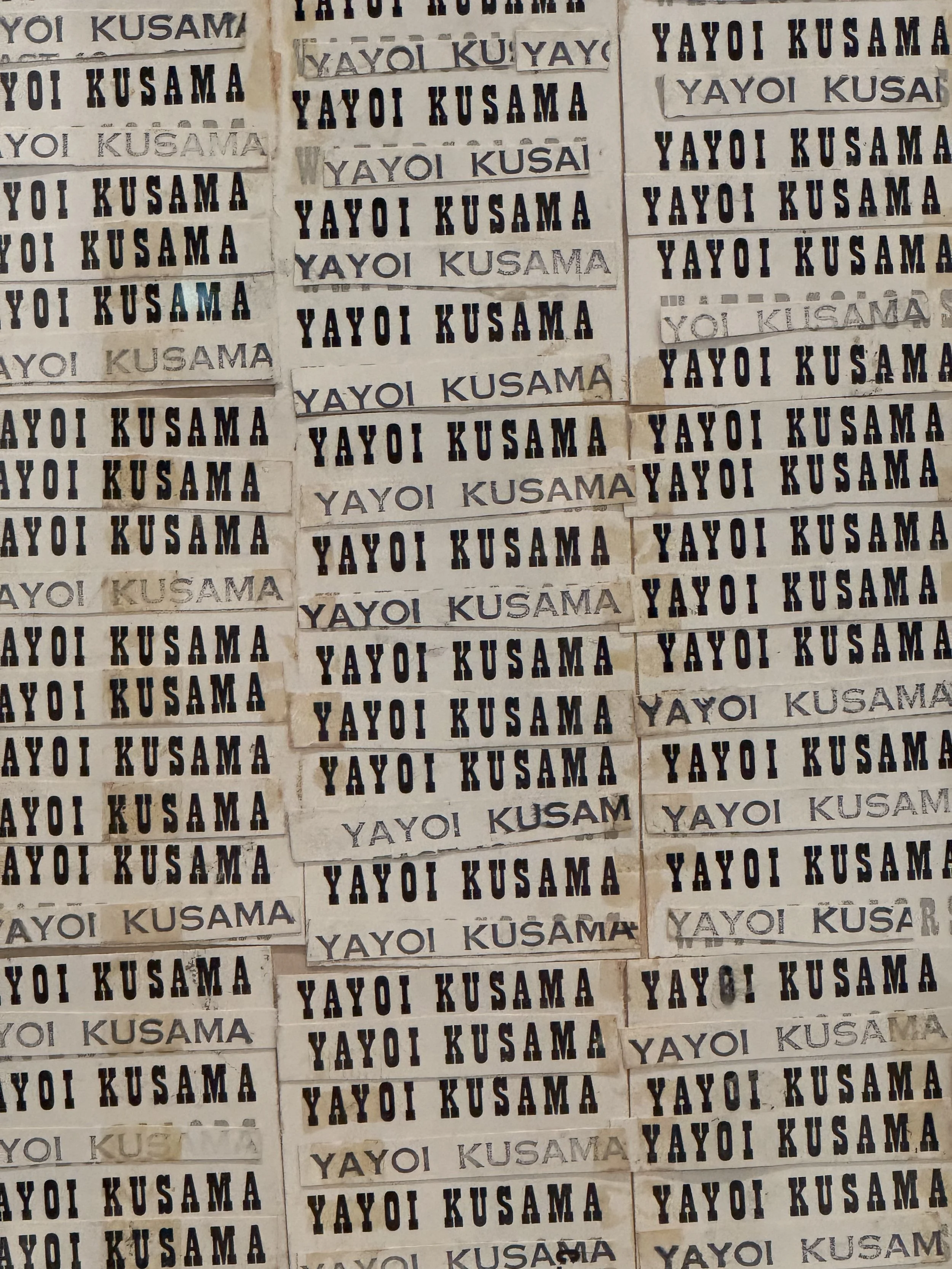

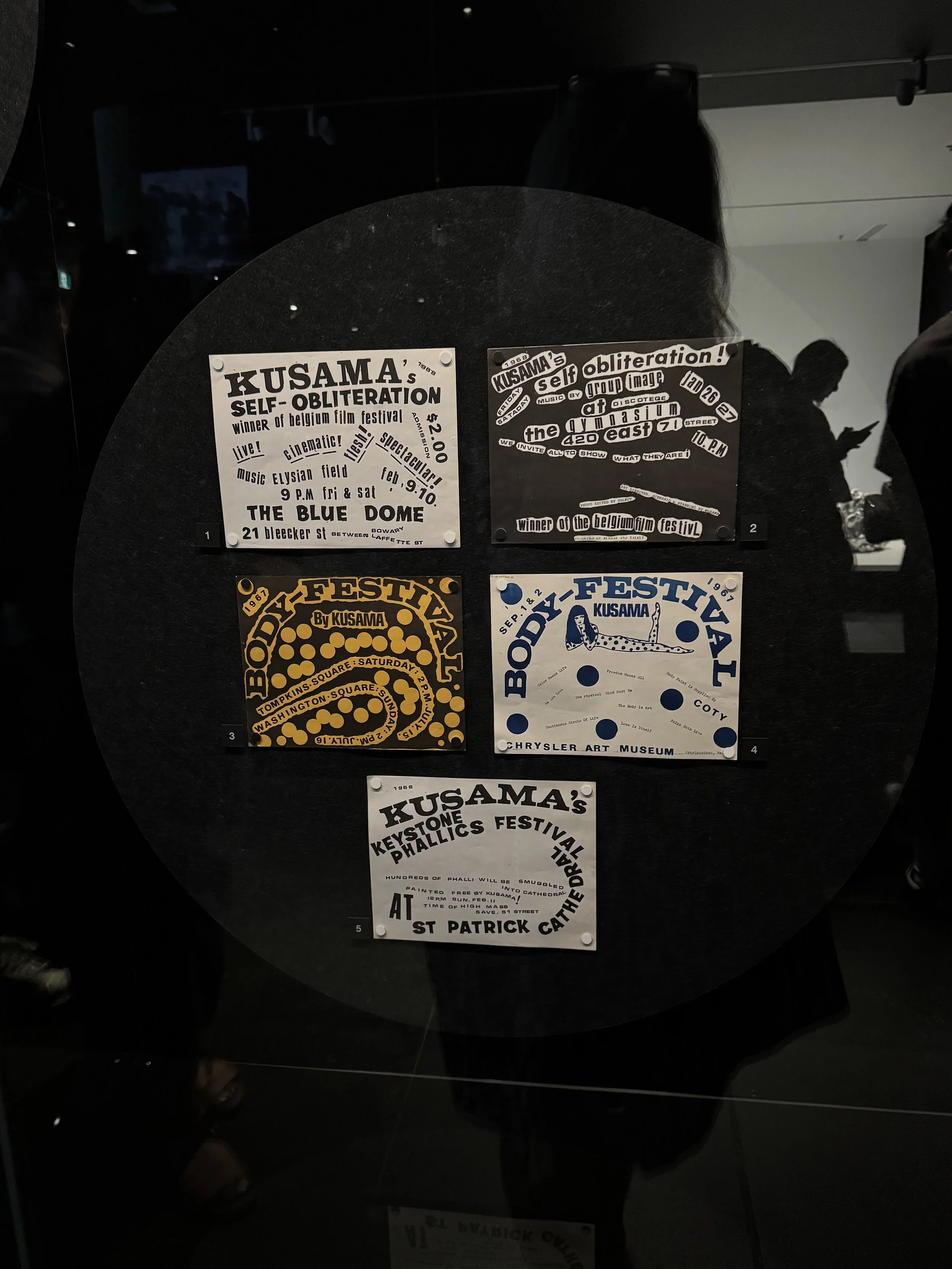
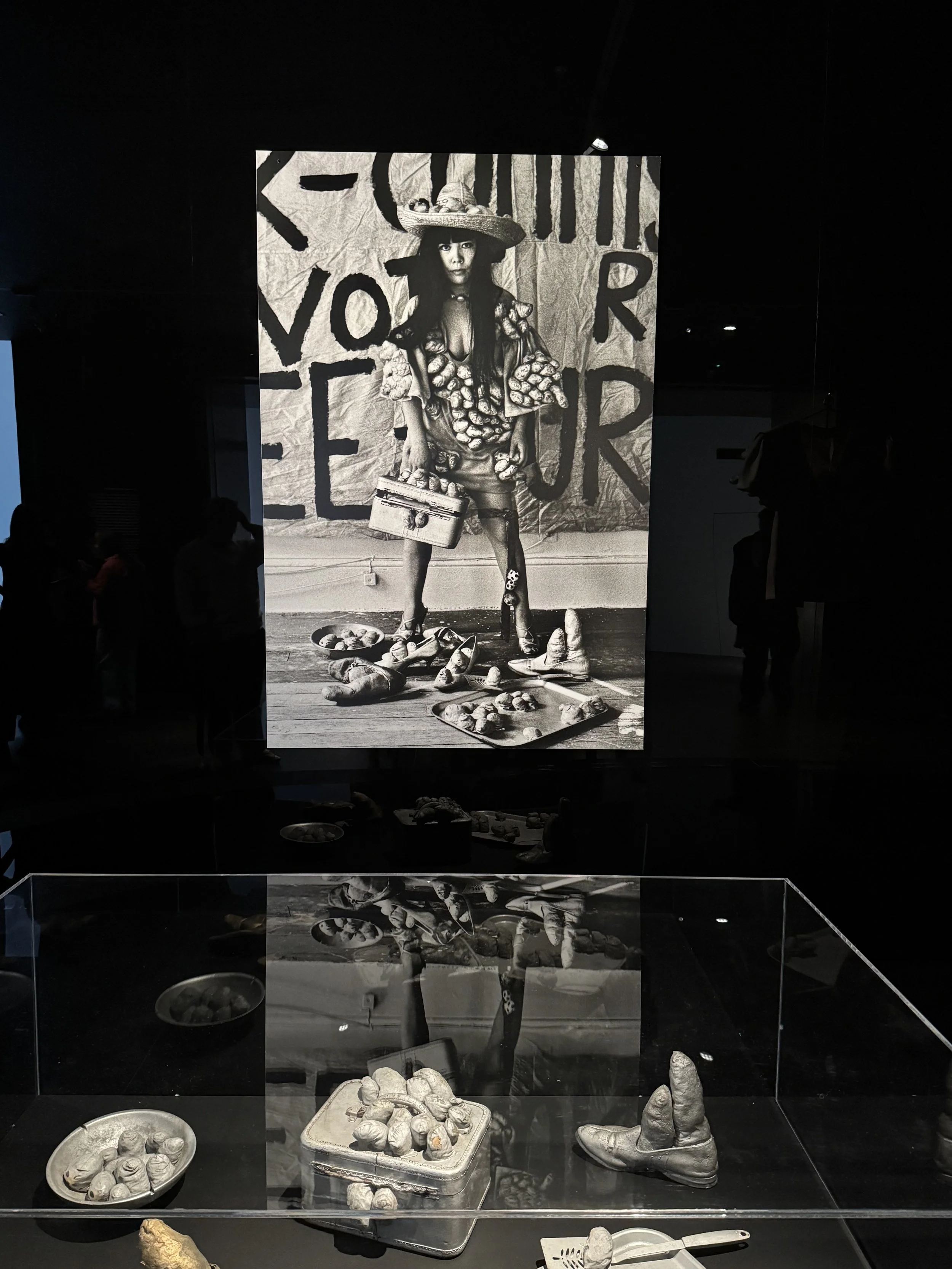
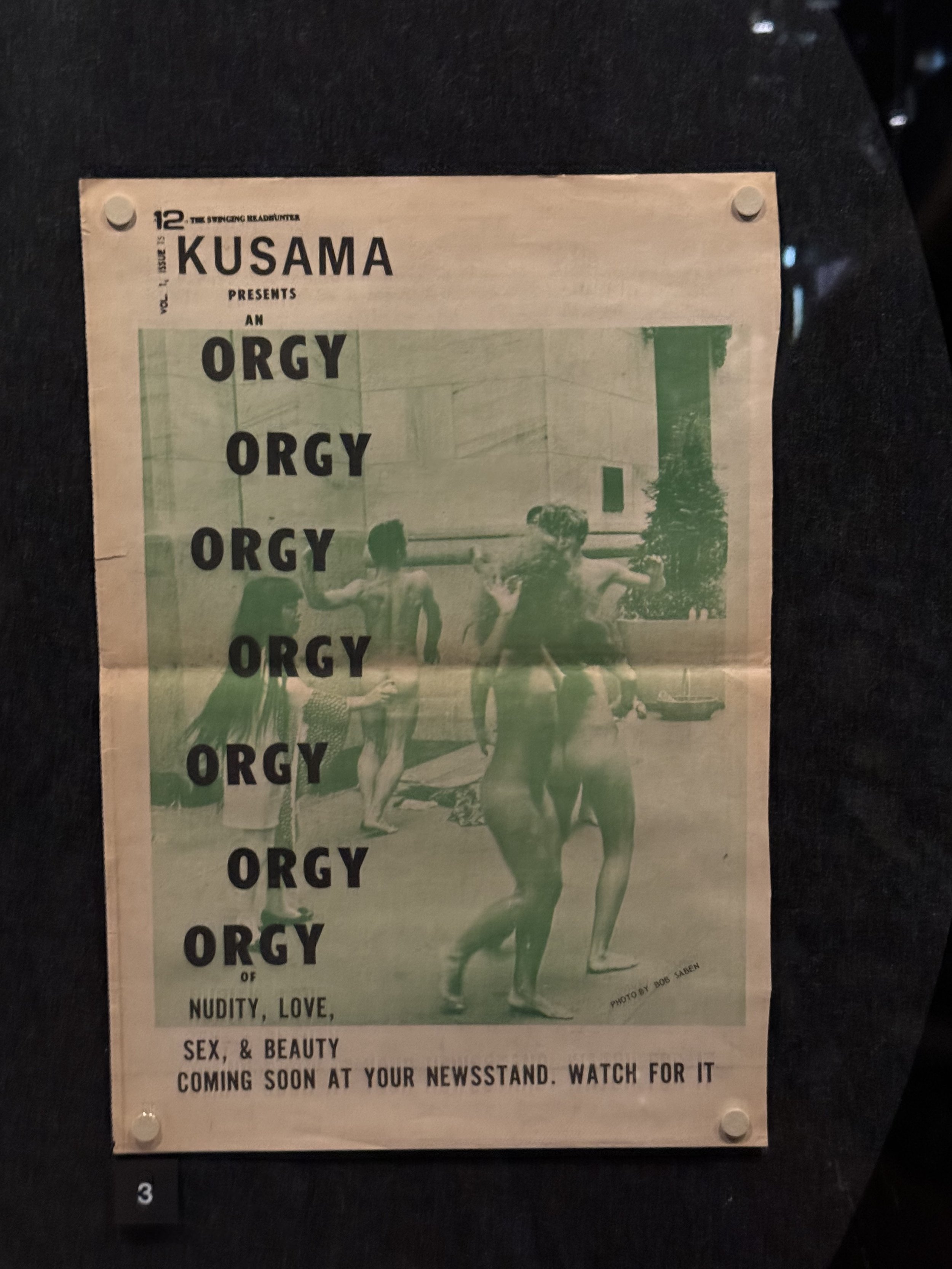
Her migration to New York in the late 1950s marked a turning point. Kusama embedded herself in the avant-garde scene, brushing shoulders with Andy Warhol and Claes Oldenburg, though her work often went unrecognised. Her happenings and performance pieces in the 1960s, which merged body art with anti-war protest, placed her at the forefront of radical art—yet systemic sexism and racism dimmed the spotlight.
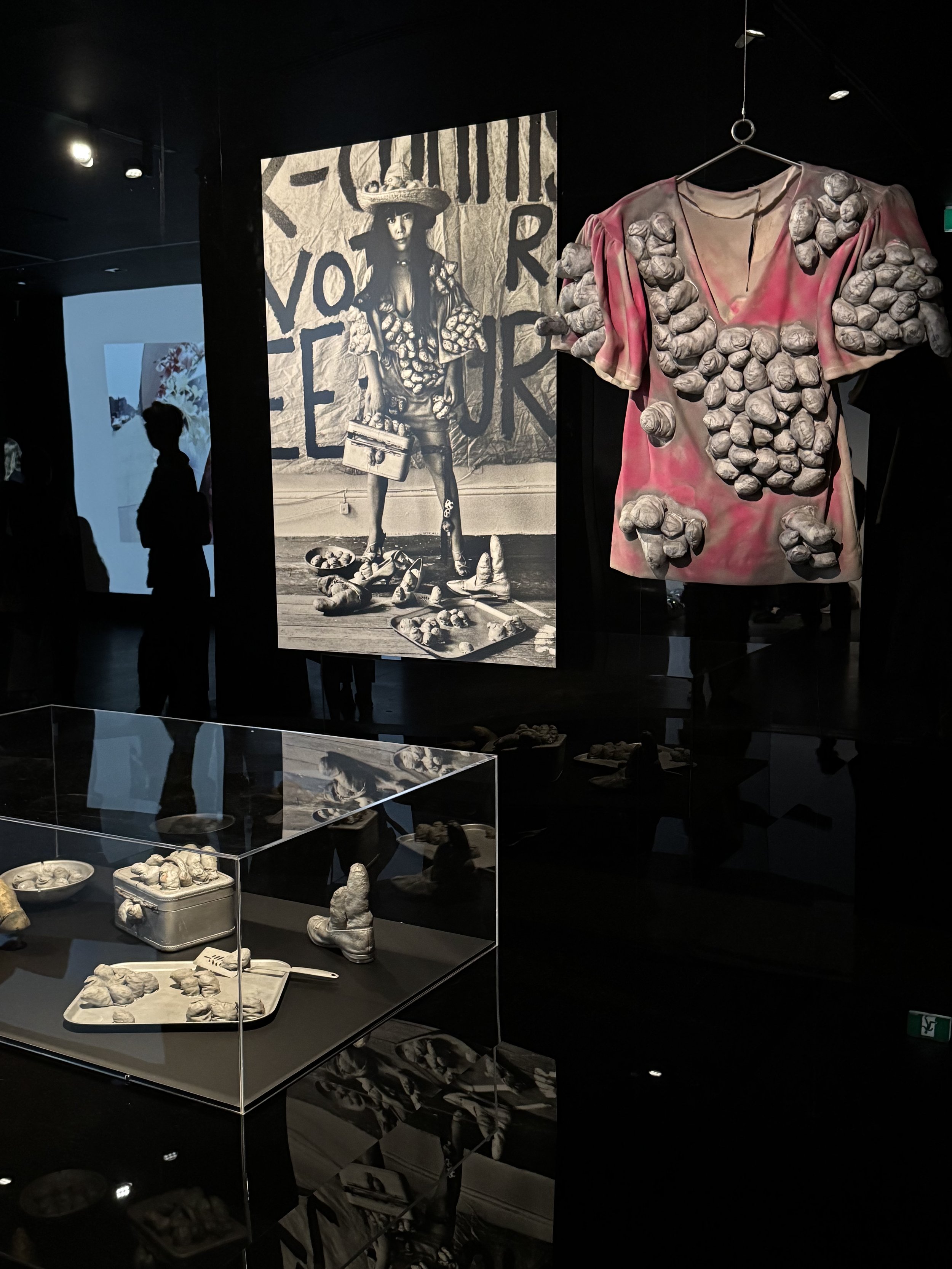
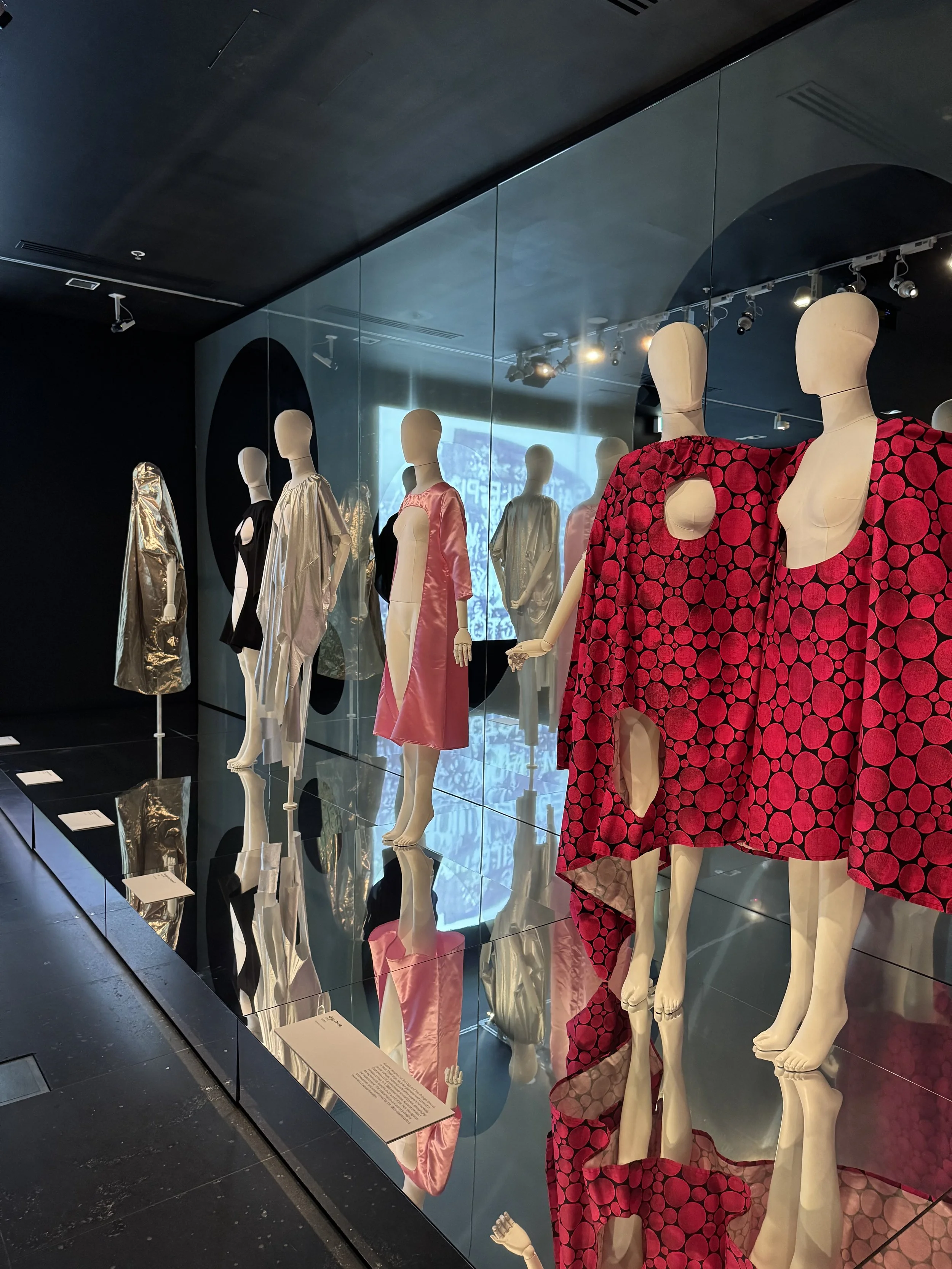
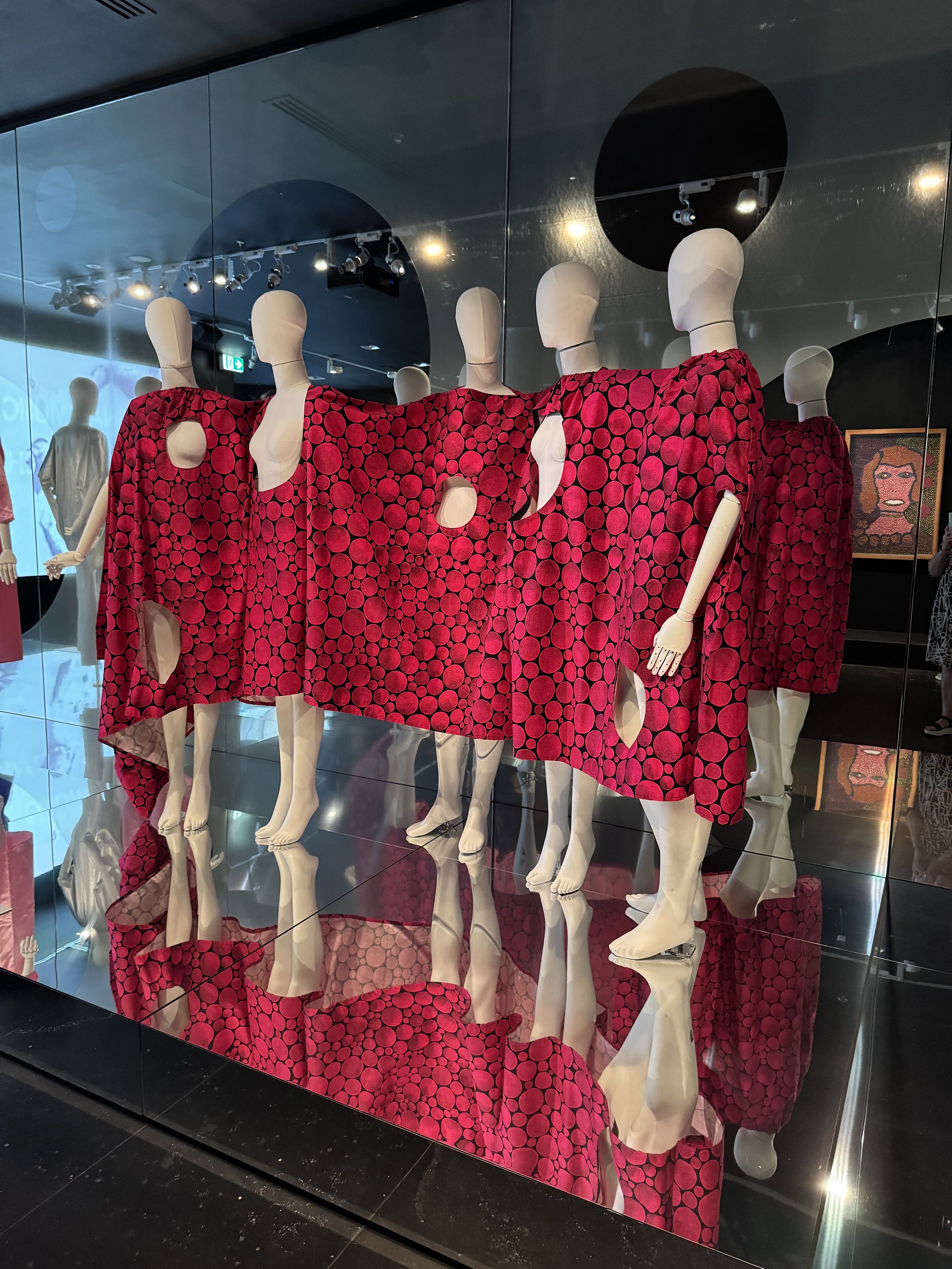
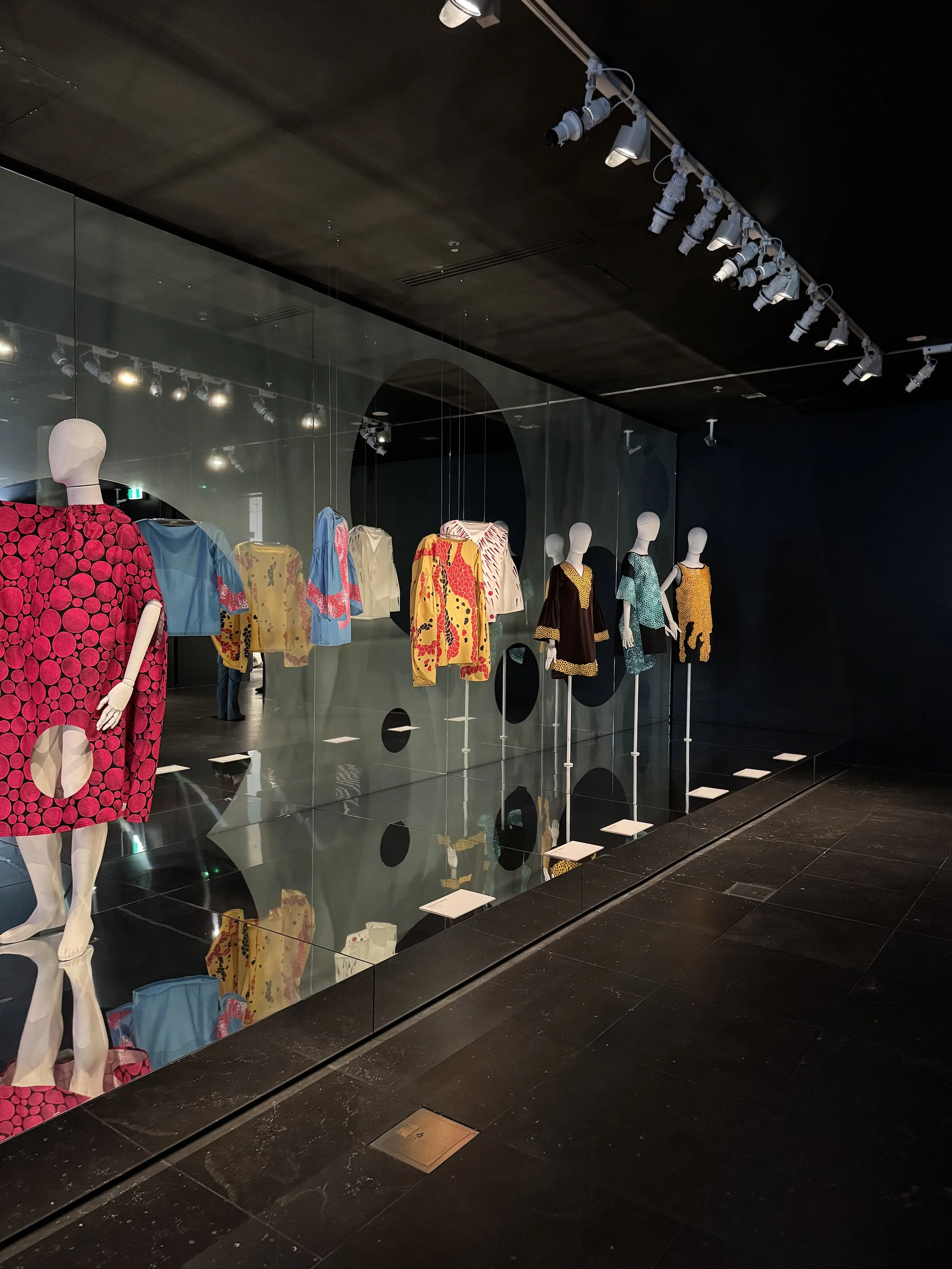
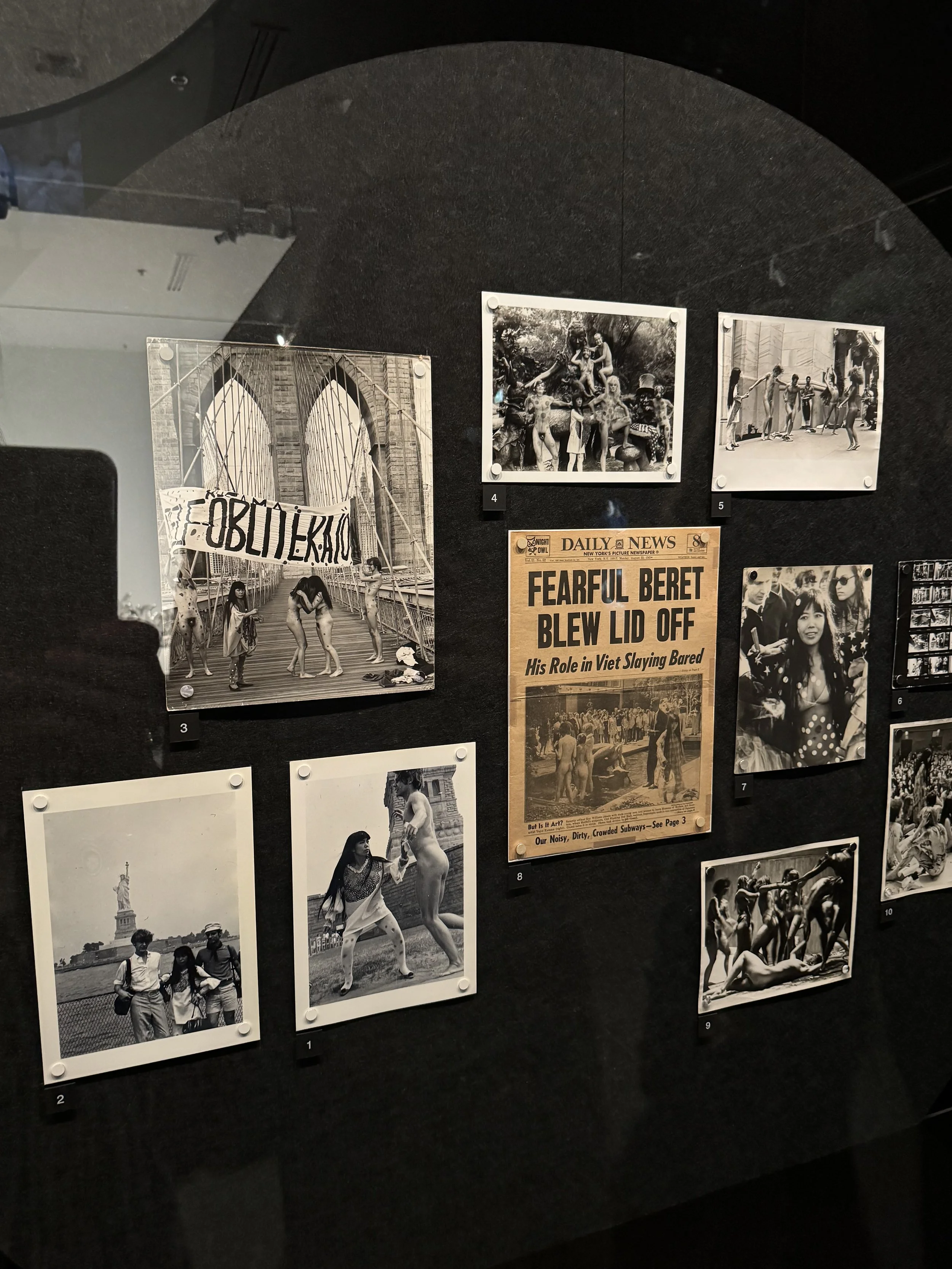
Maximalism With Meaning
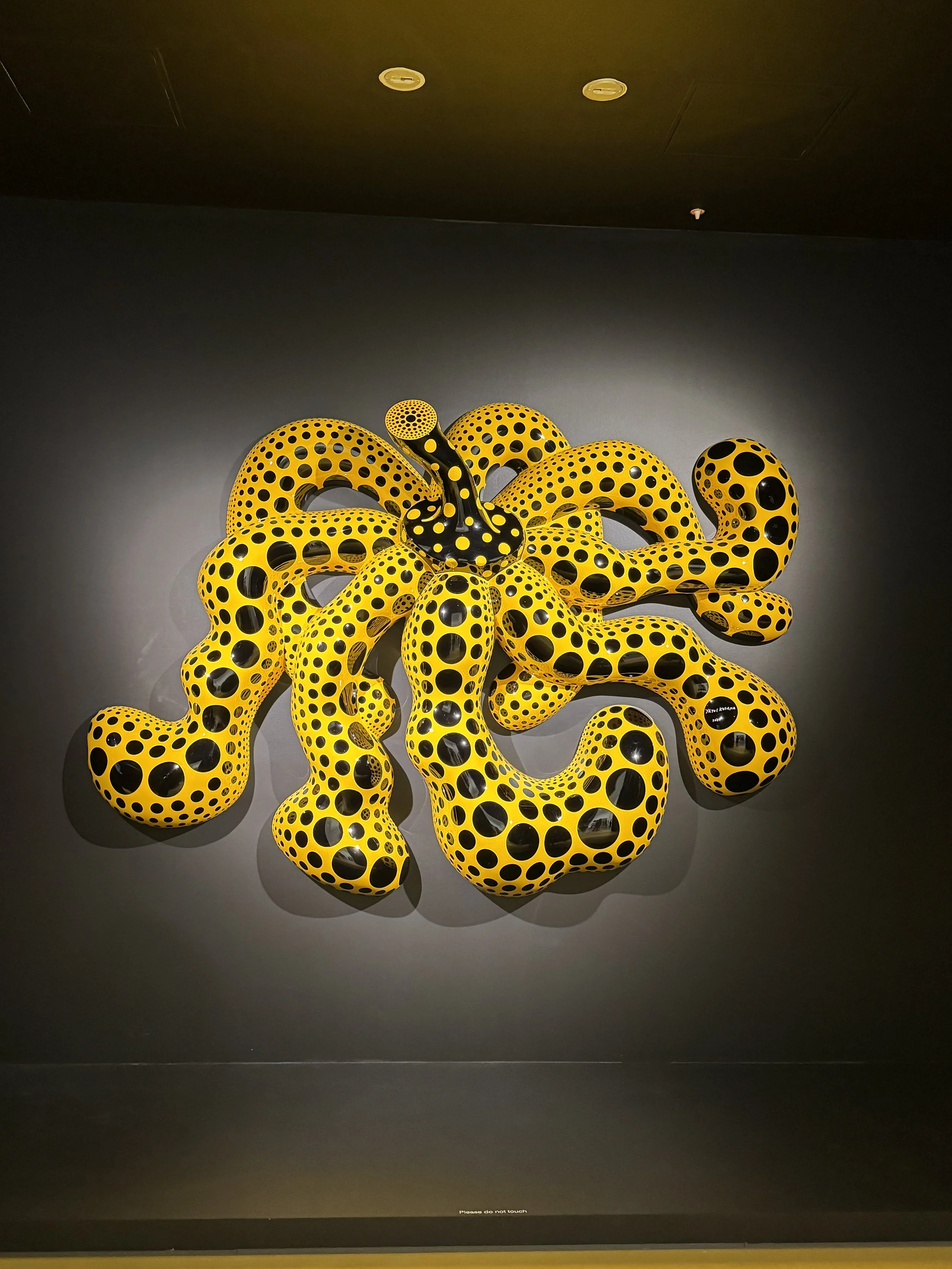
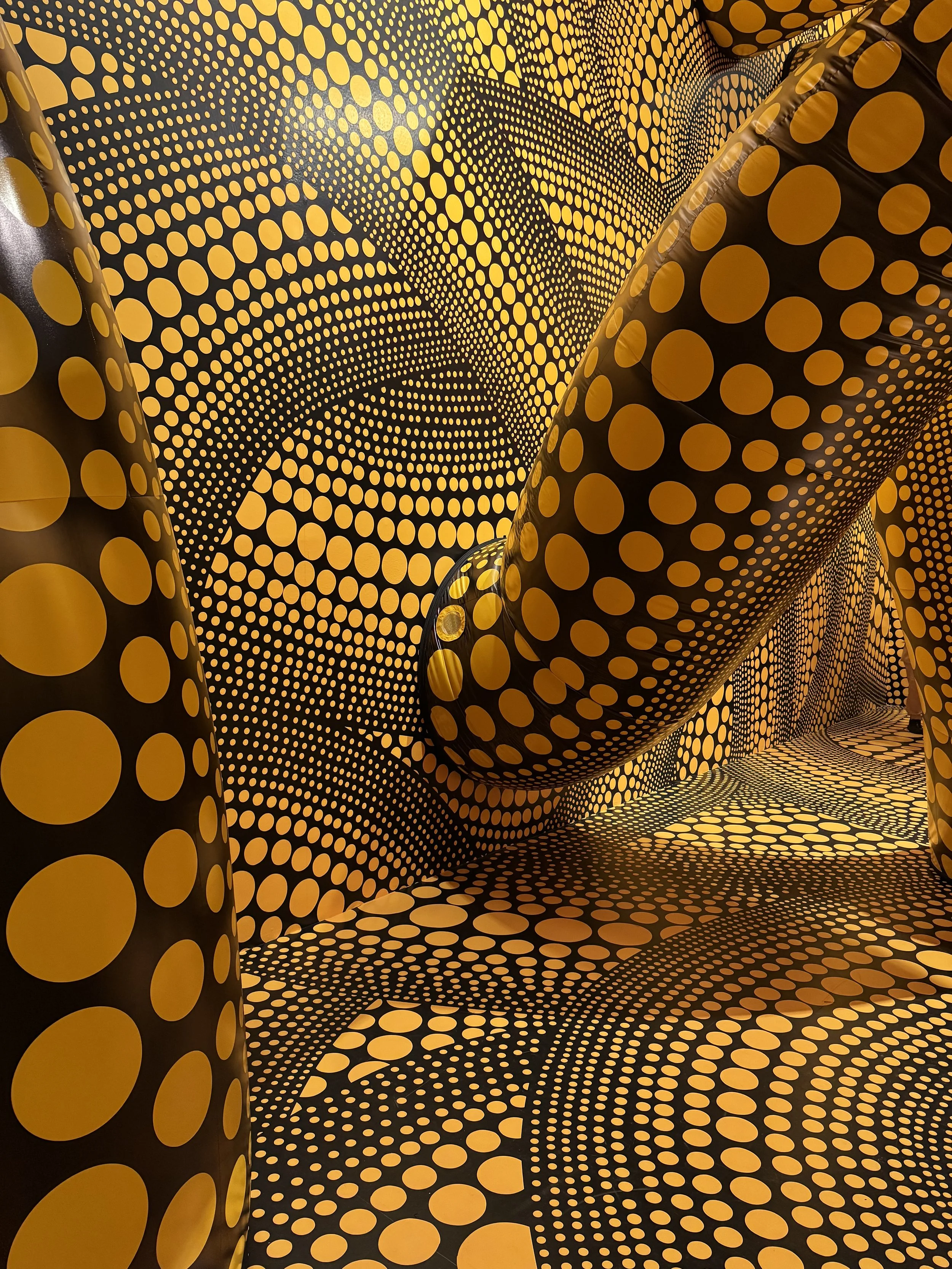
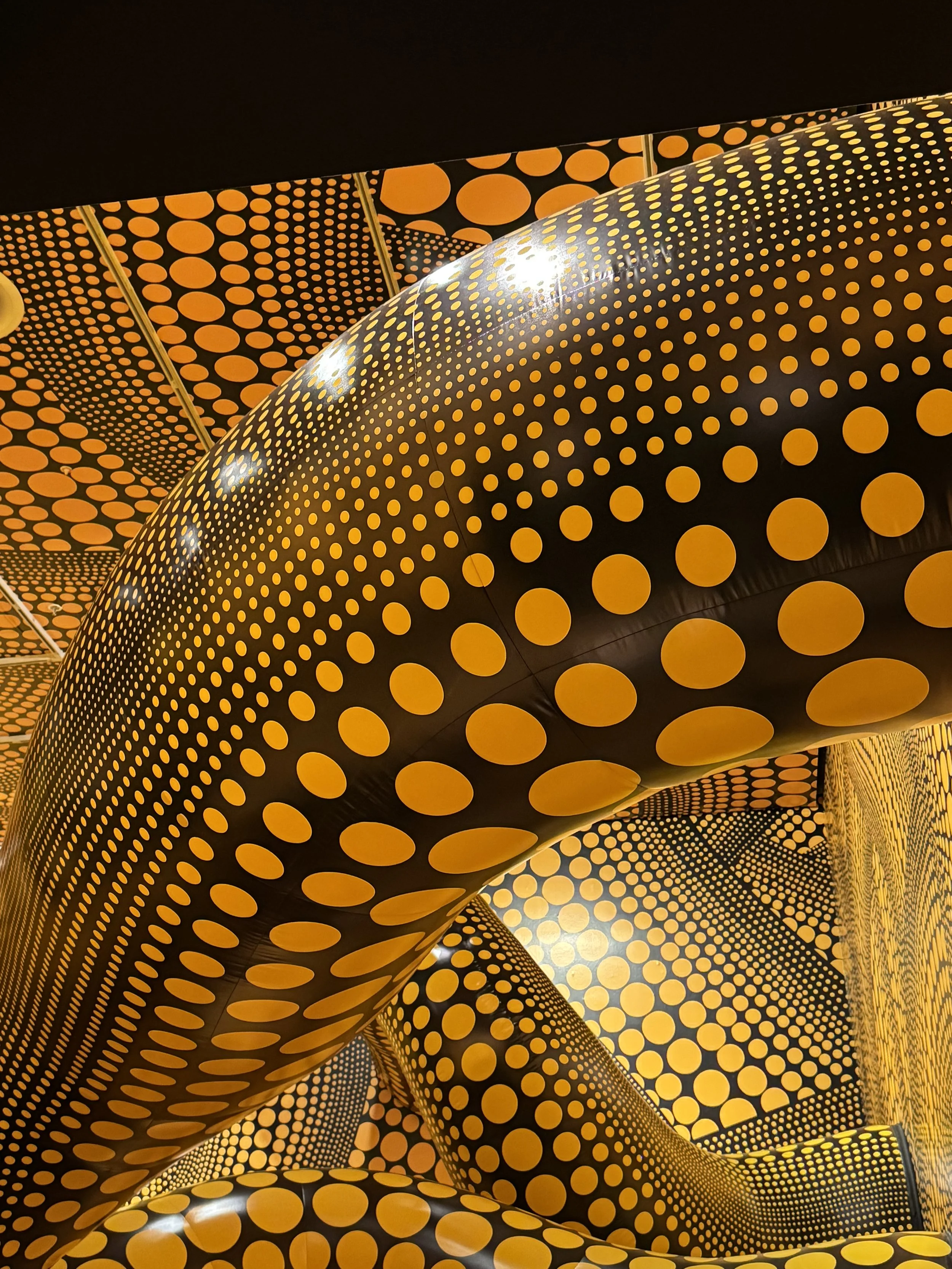
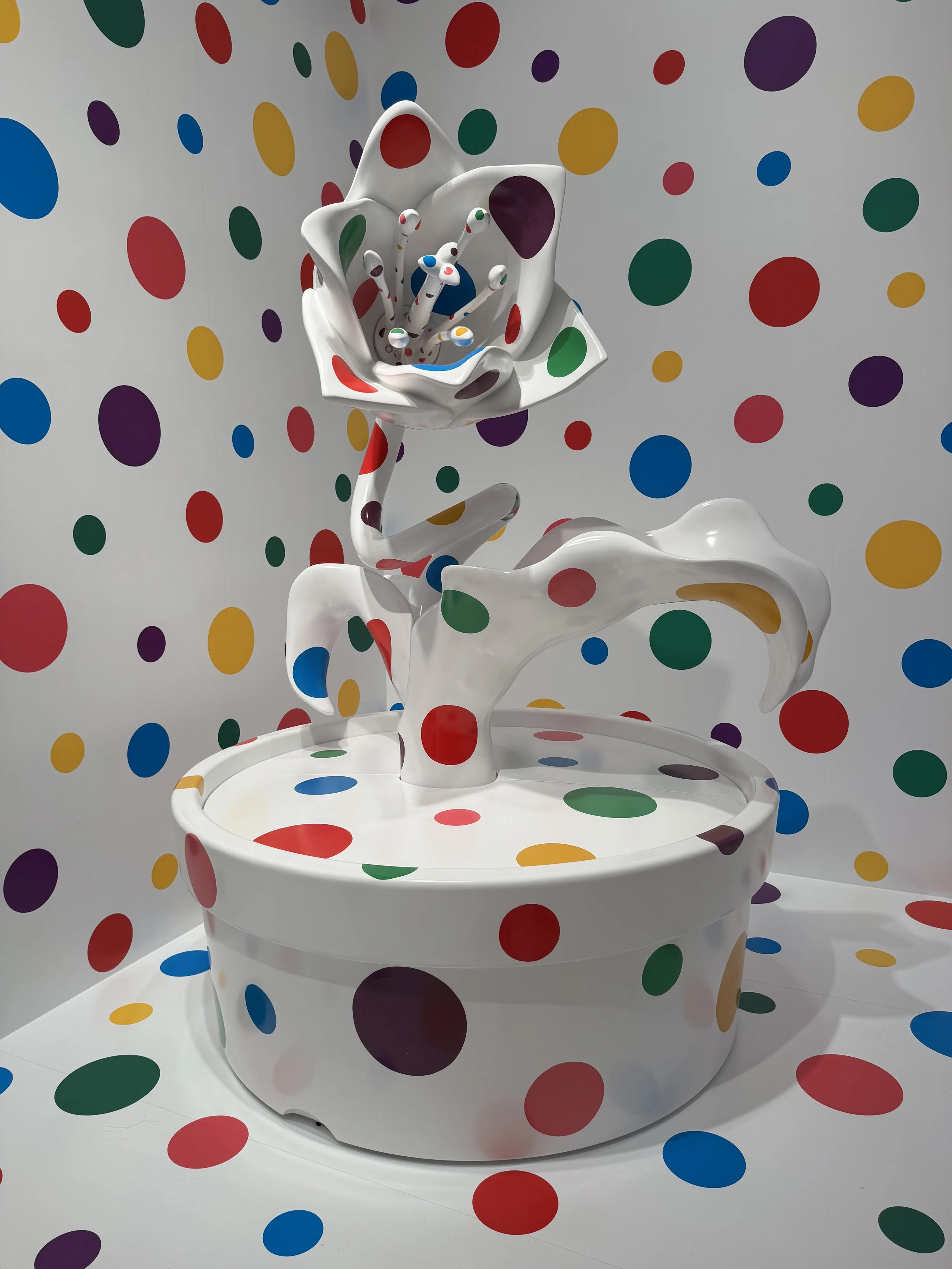
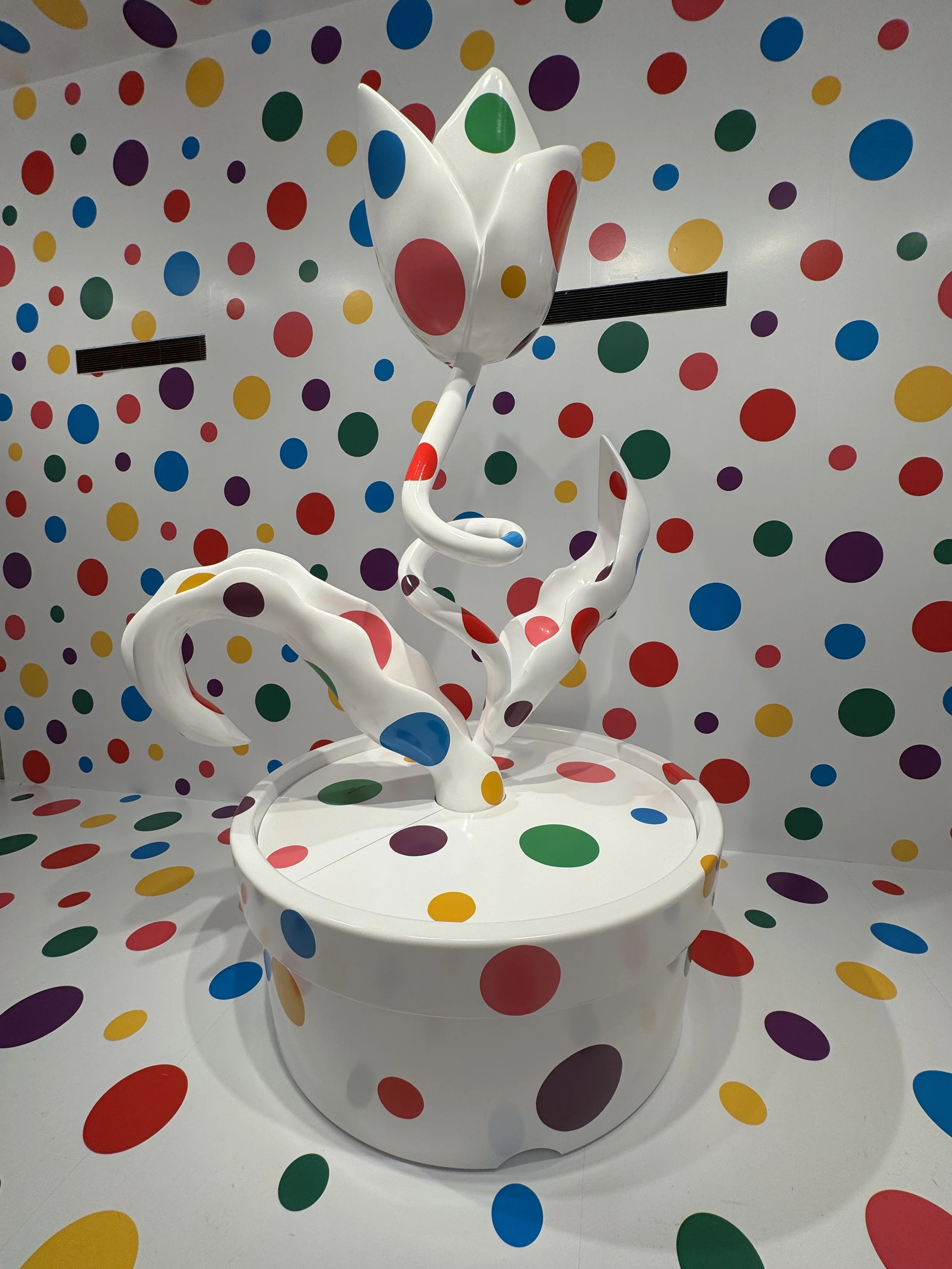
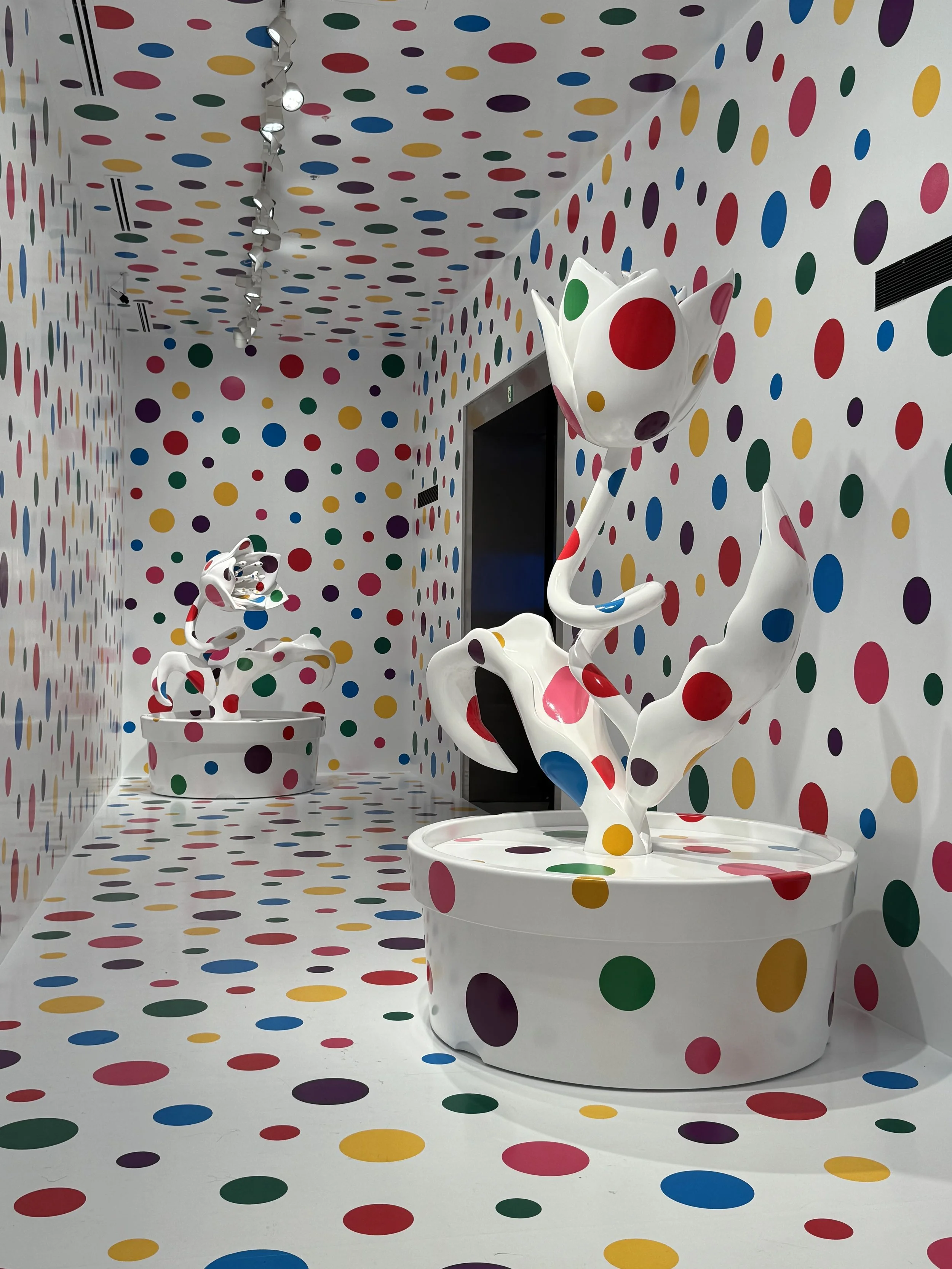
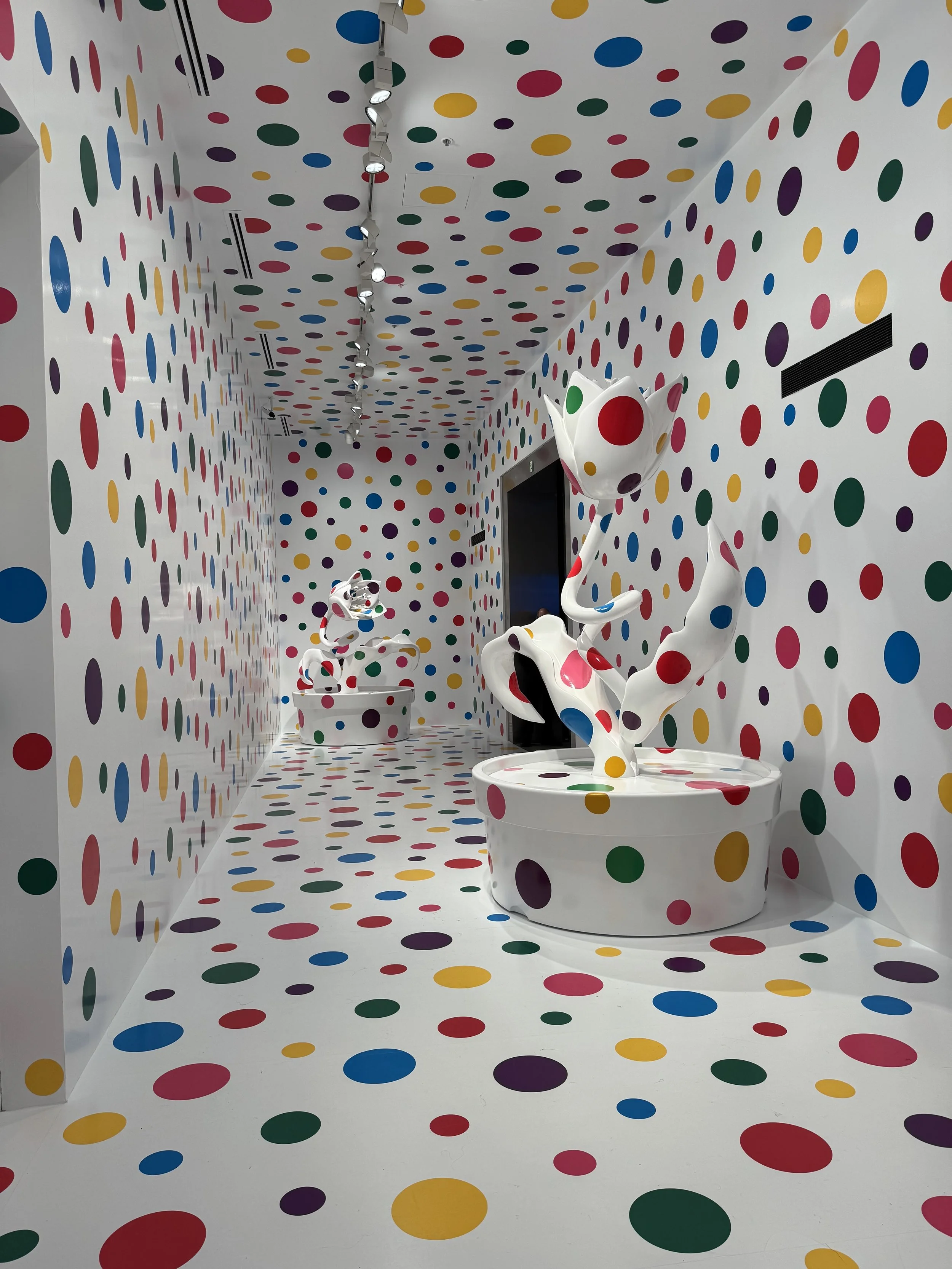
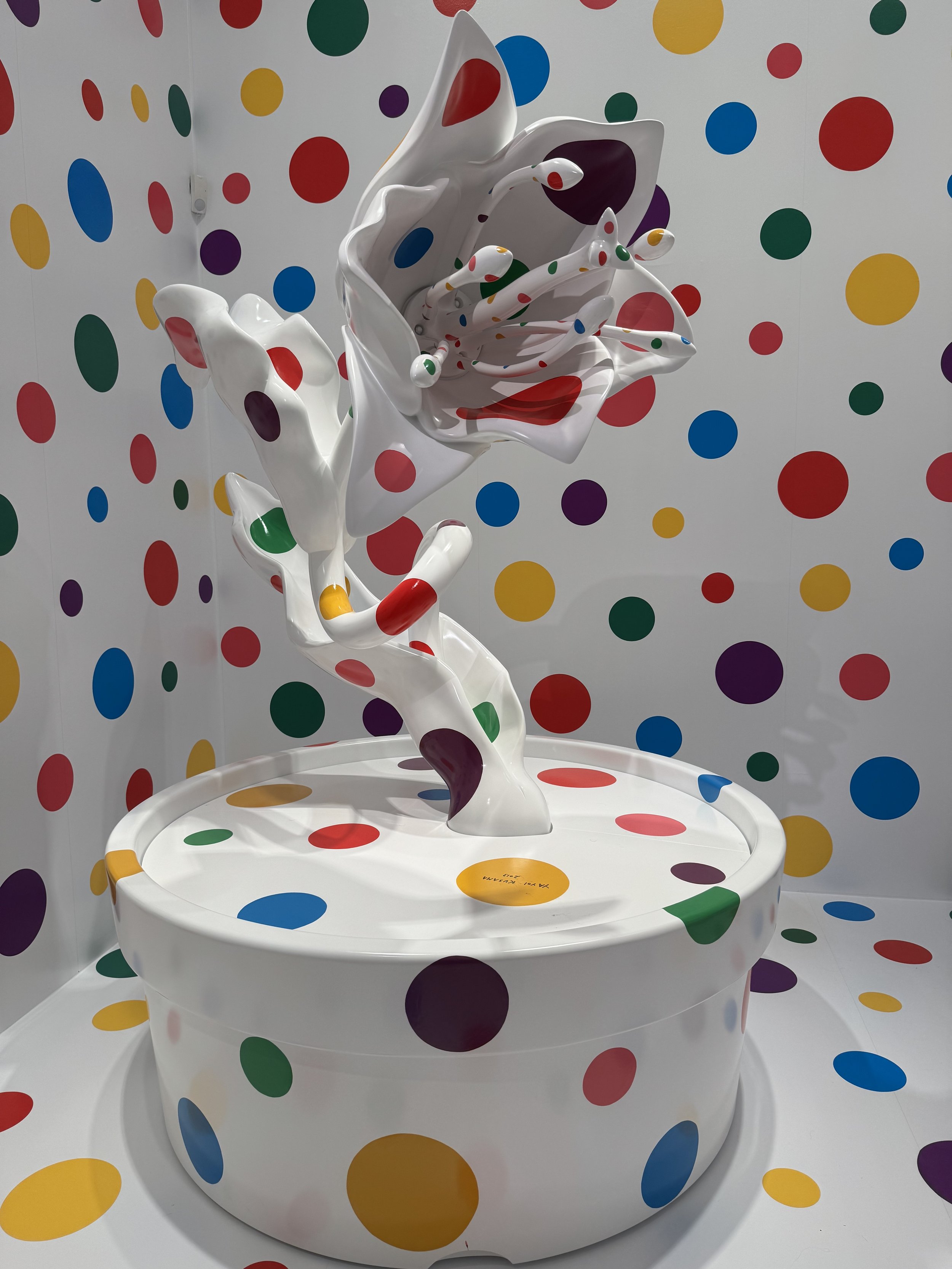
Kusama is the queen of repetition. Her signature polka dots? Everywhere. But instead of feeling repetitive, it felt freeing. The sheer commitment to a motif—floor to ceiling, wall to mirror to sculpture—had me questioning my own restraint in design. Why not dot the ceiling? Why not commit to a pattern so fully it becomes your universe?
And can we talk about her colour palette? High-contrast, high-impact, zero fear. It reminded me how powerful colour can be when it's used to say something—not just match something.
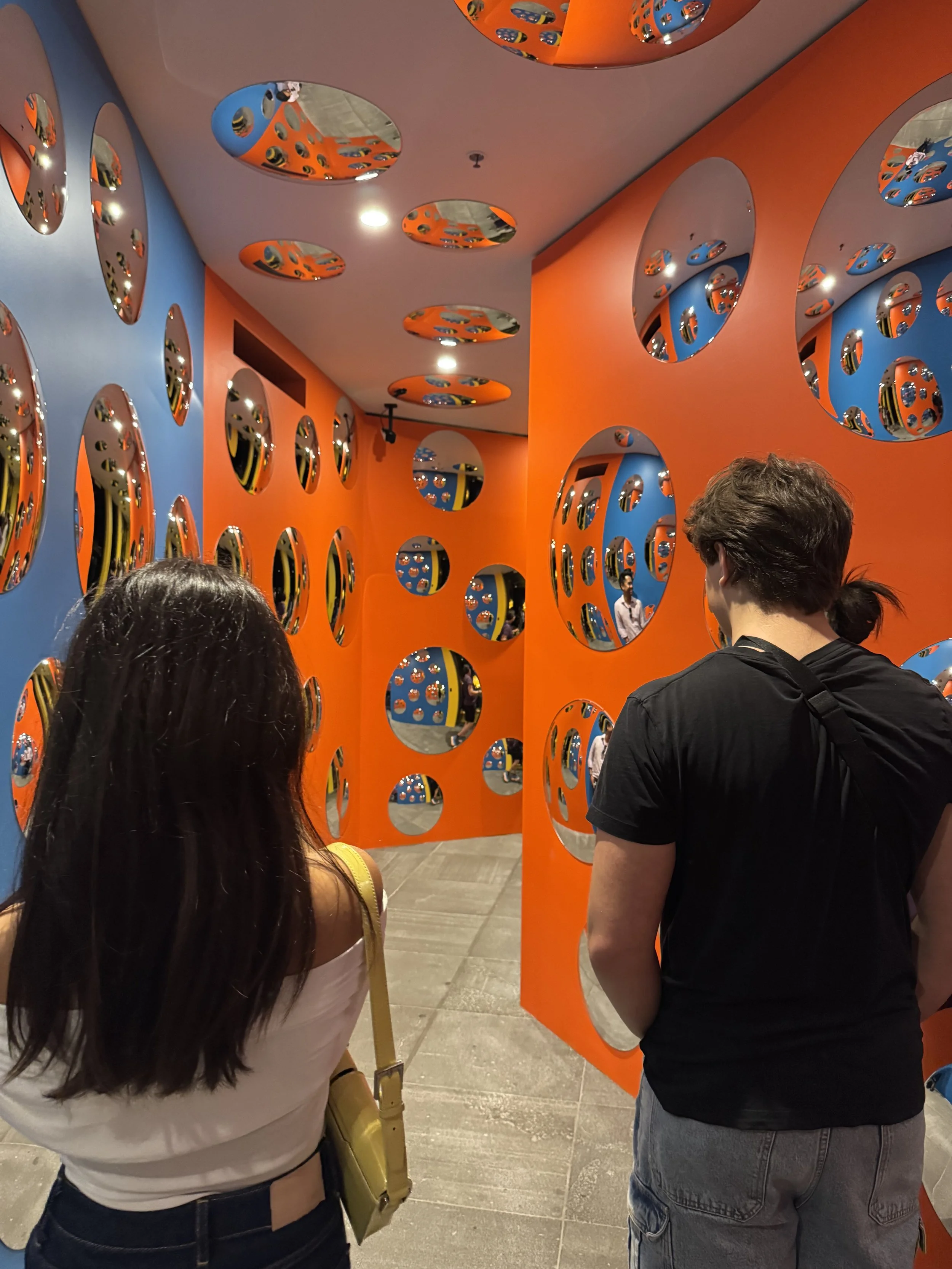
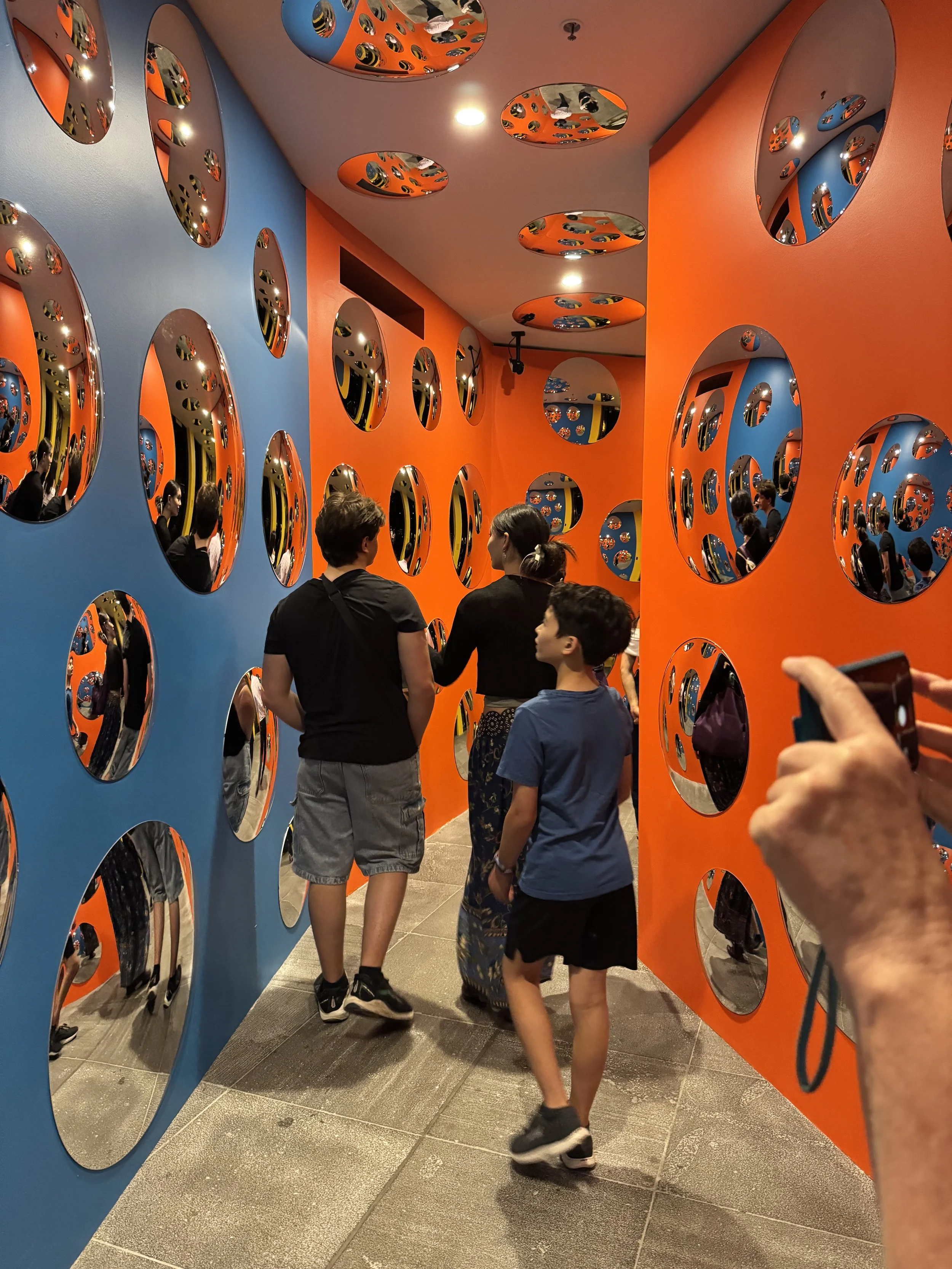
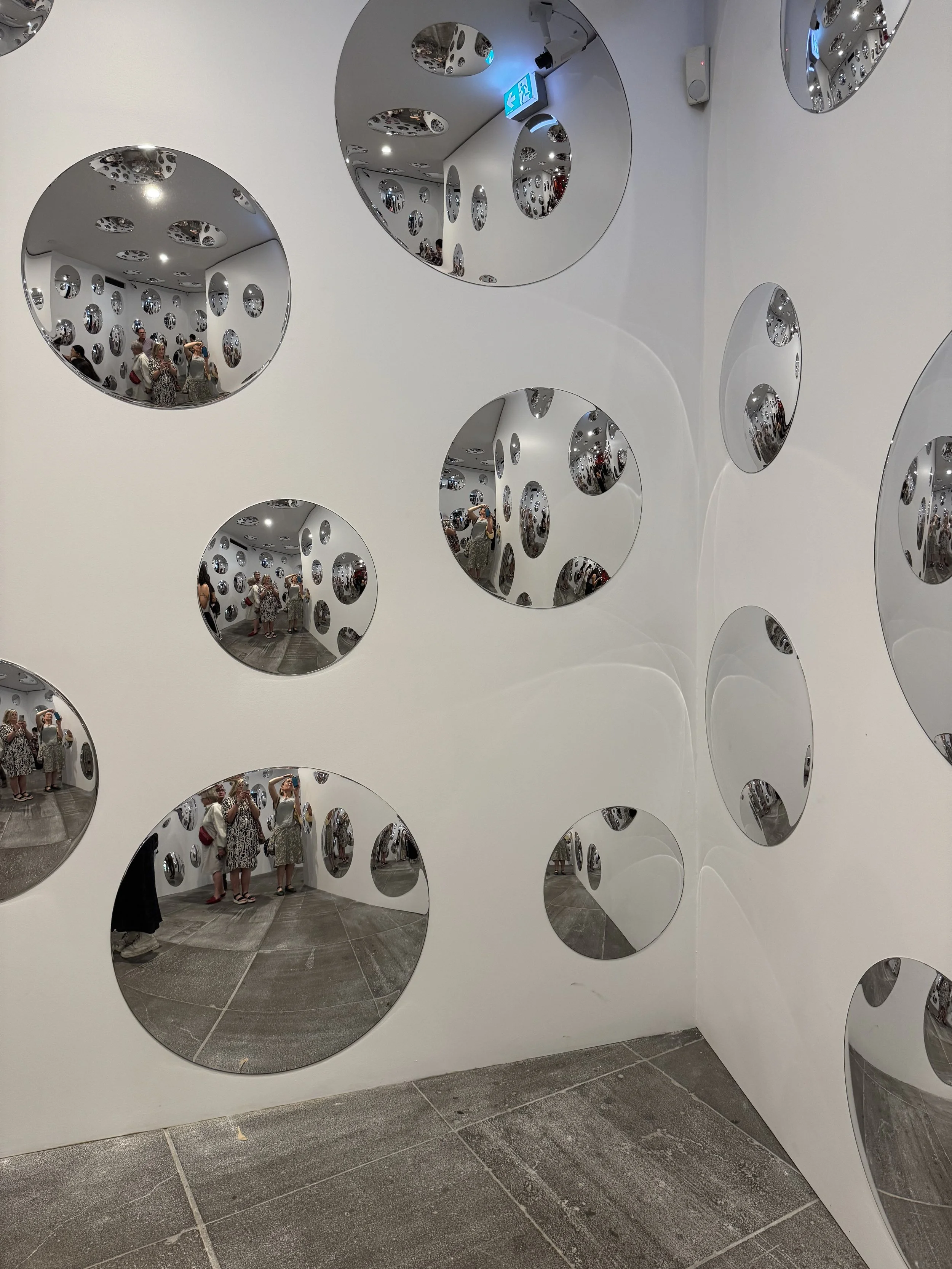
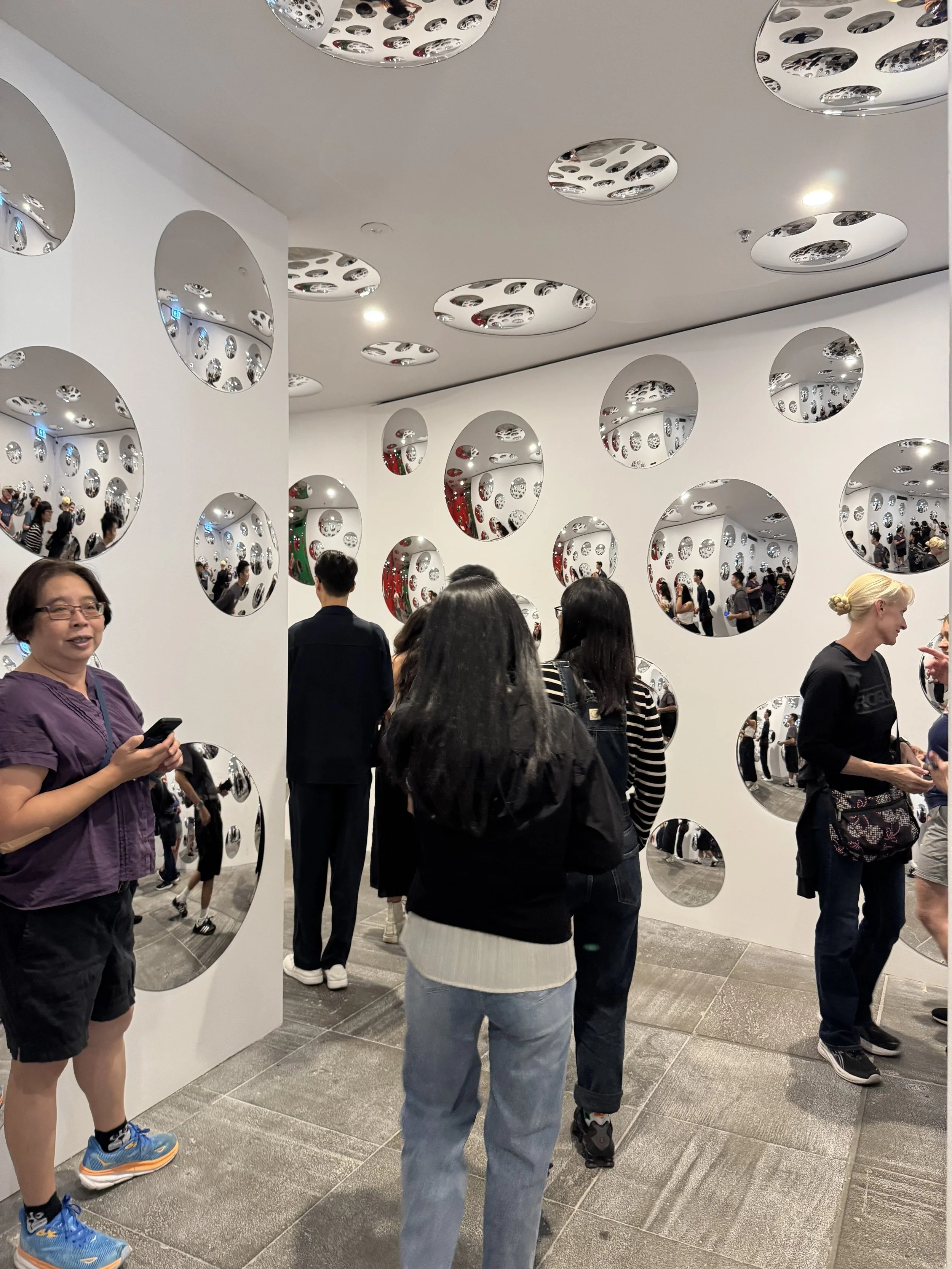
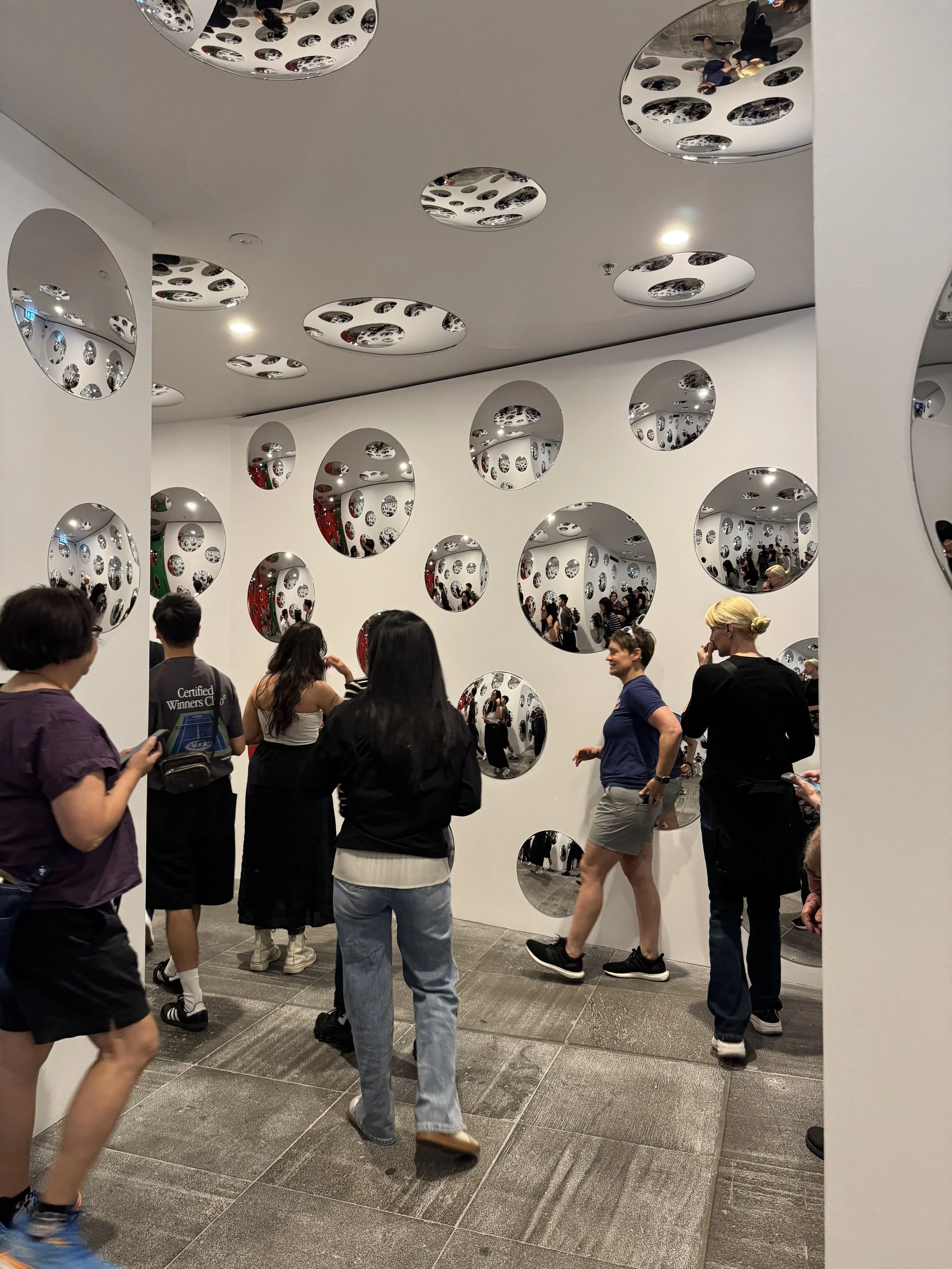
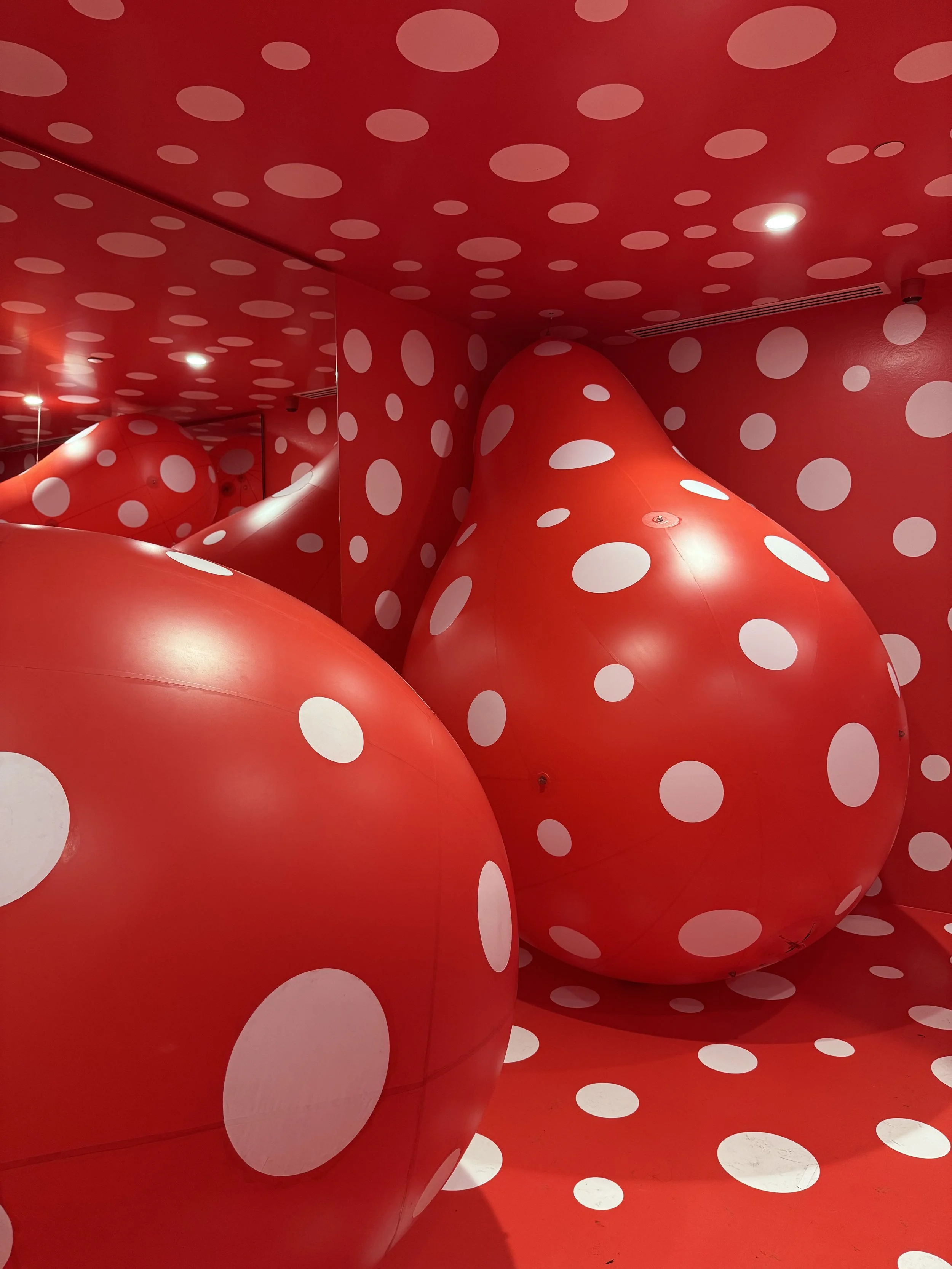
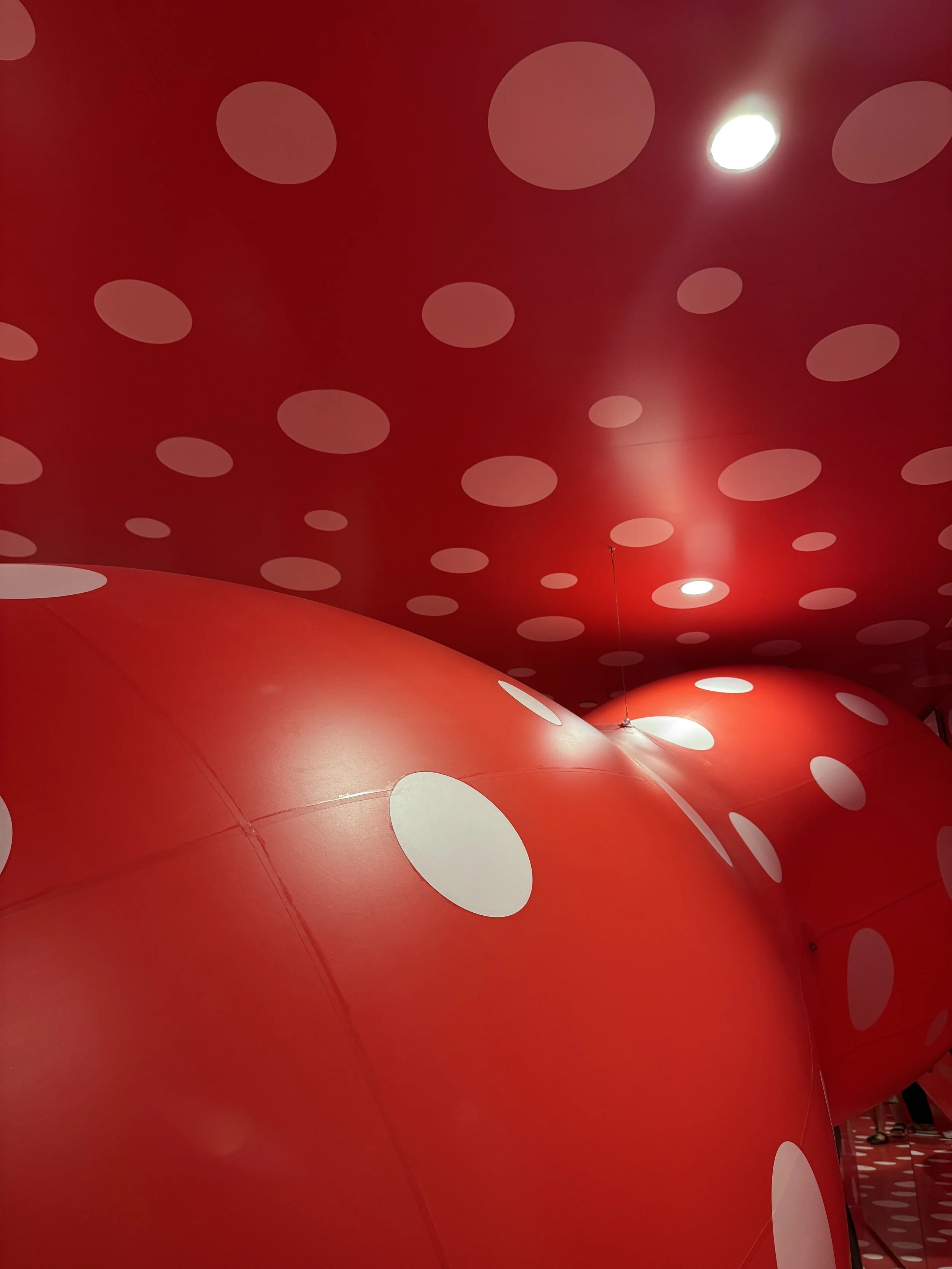
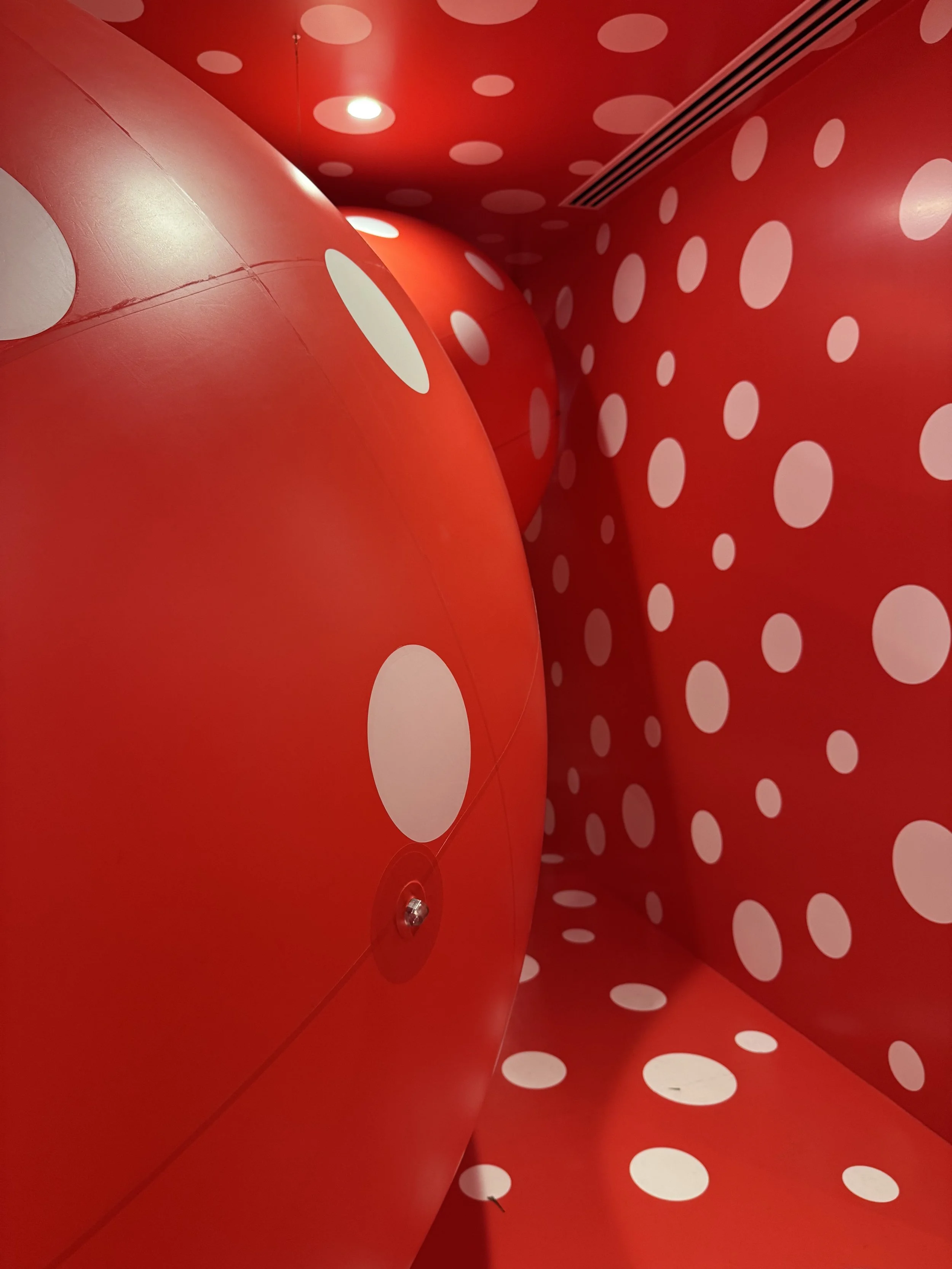
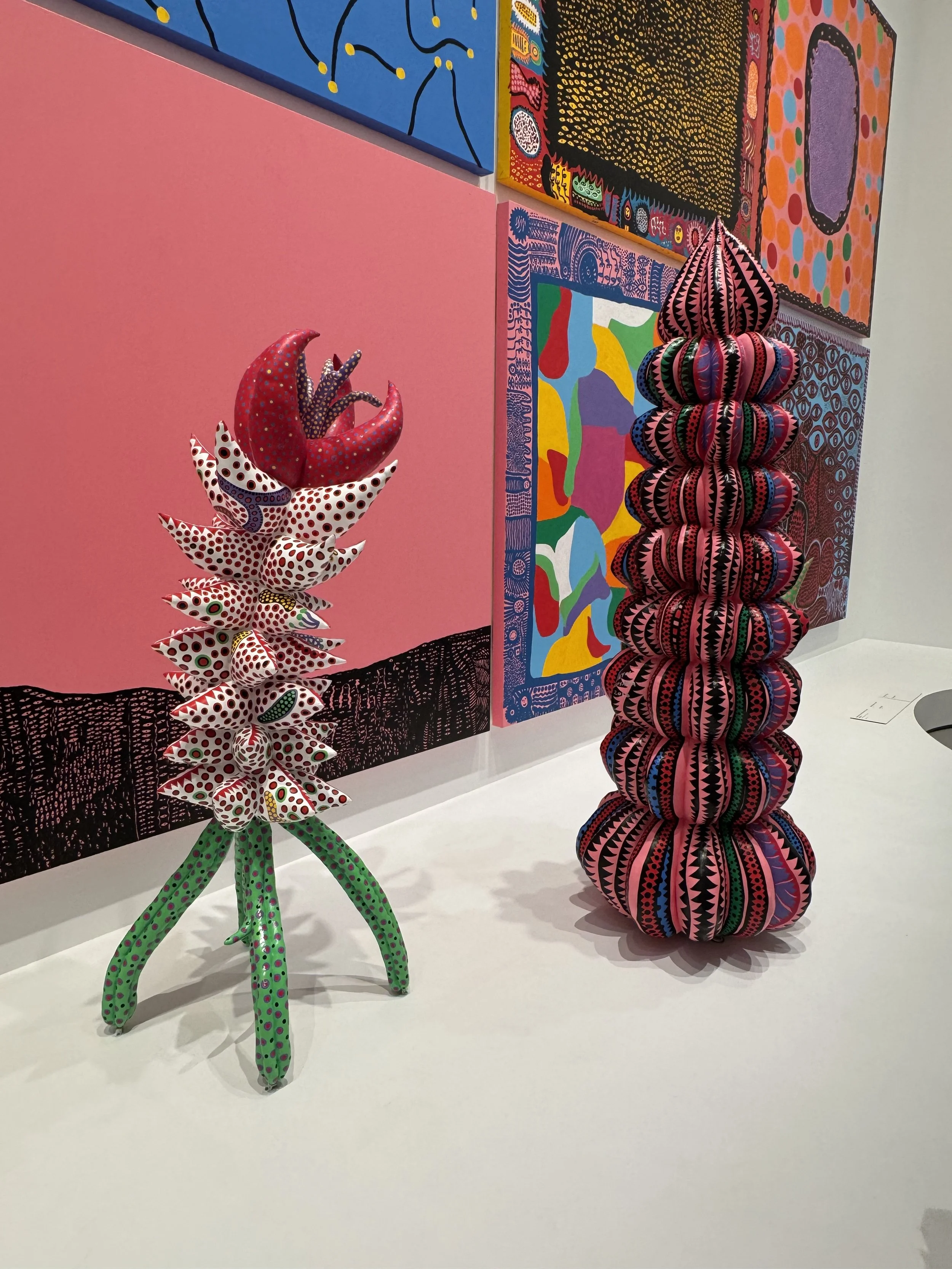
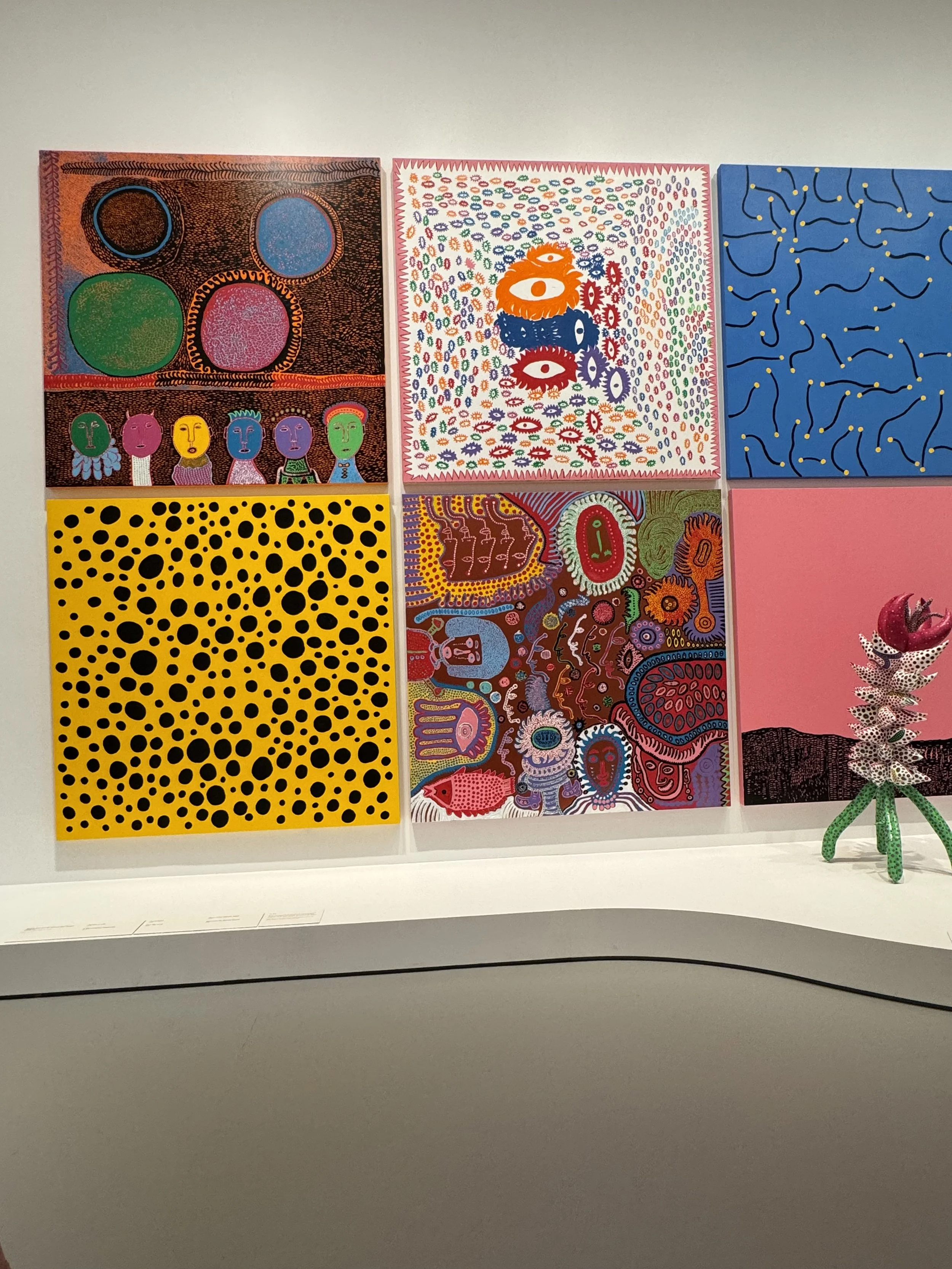
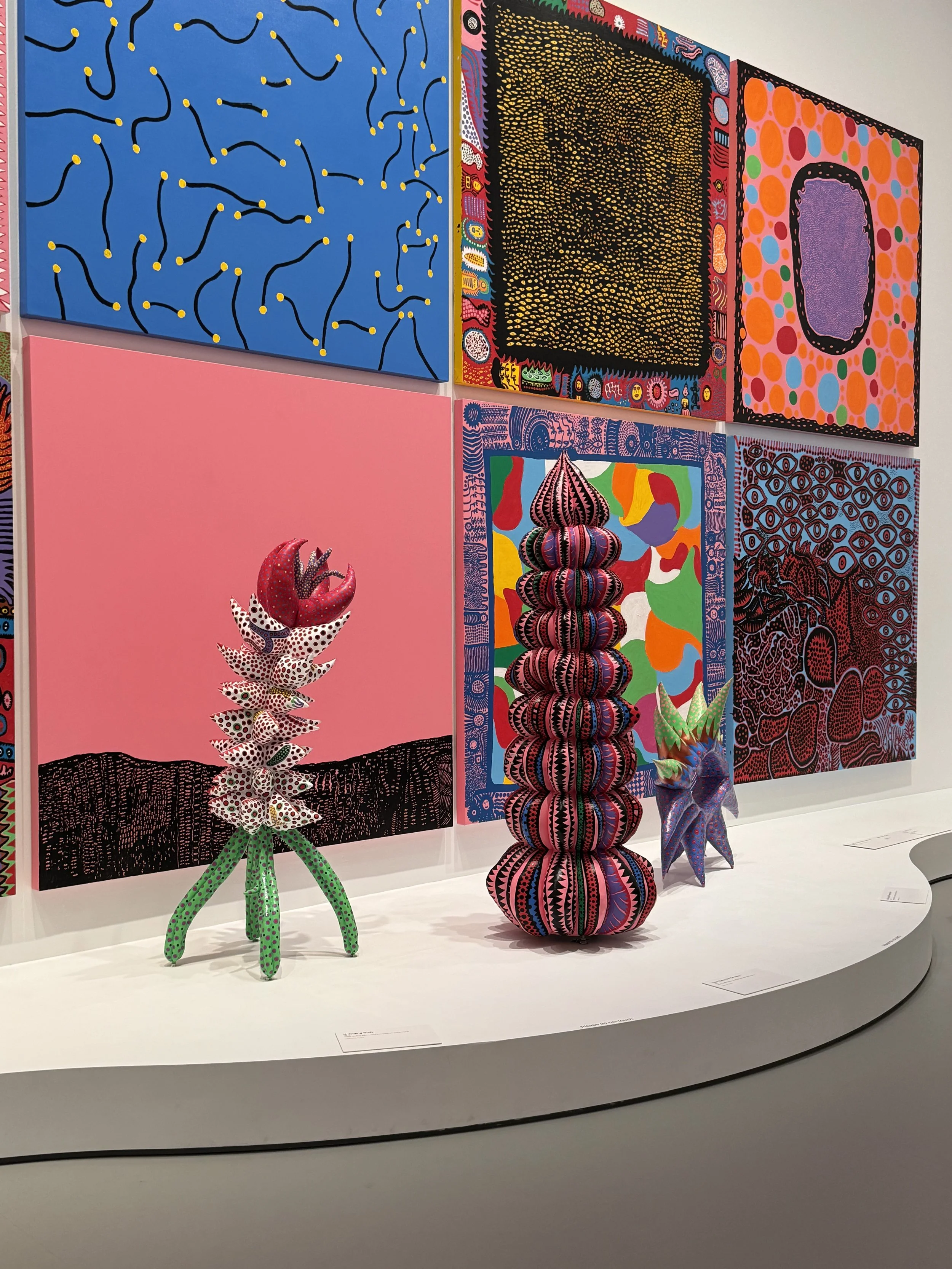
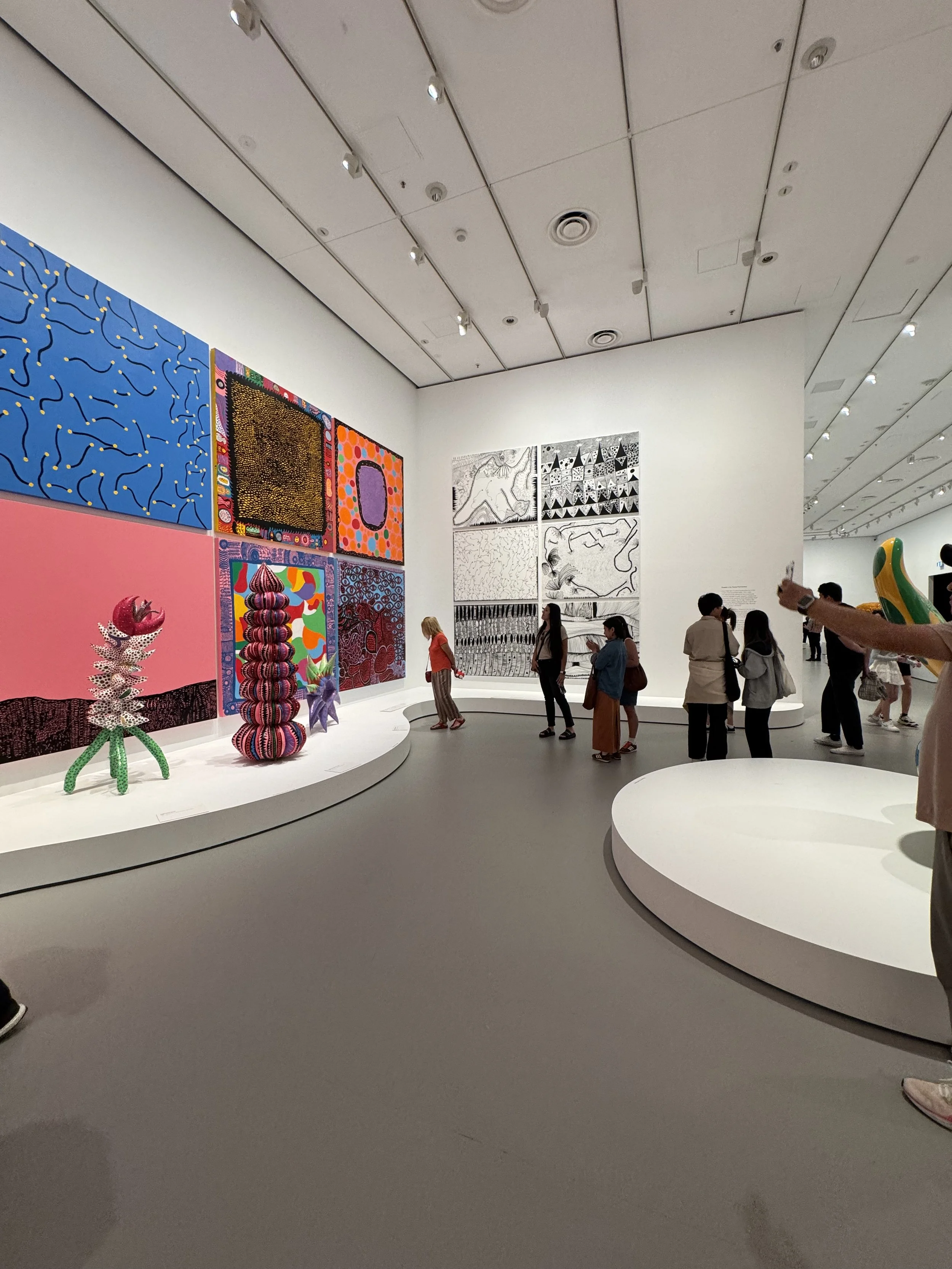
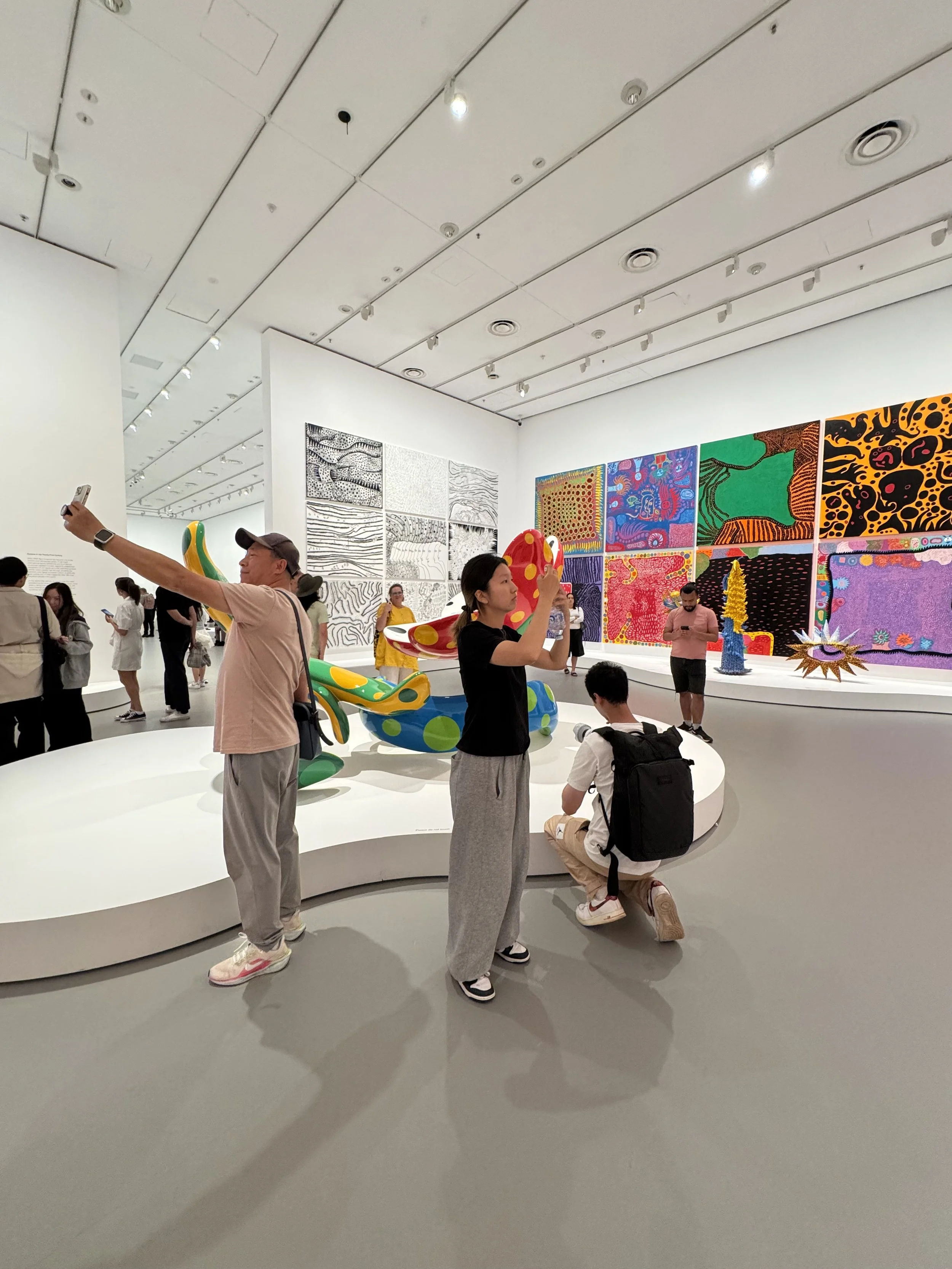
The Rooms That Blew My Mind
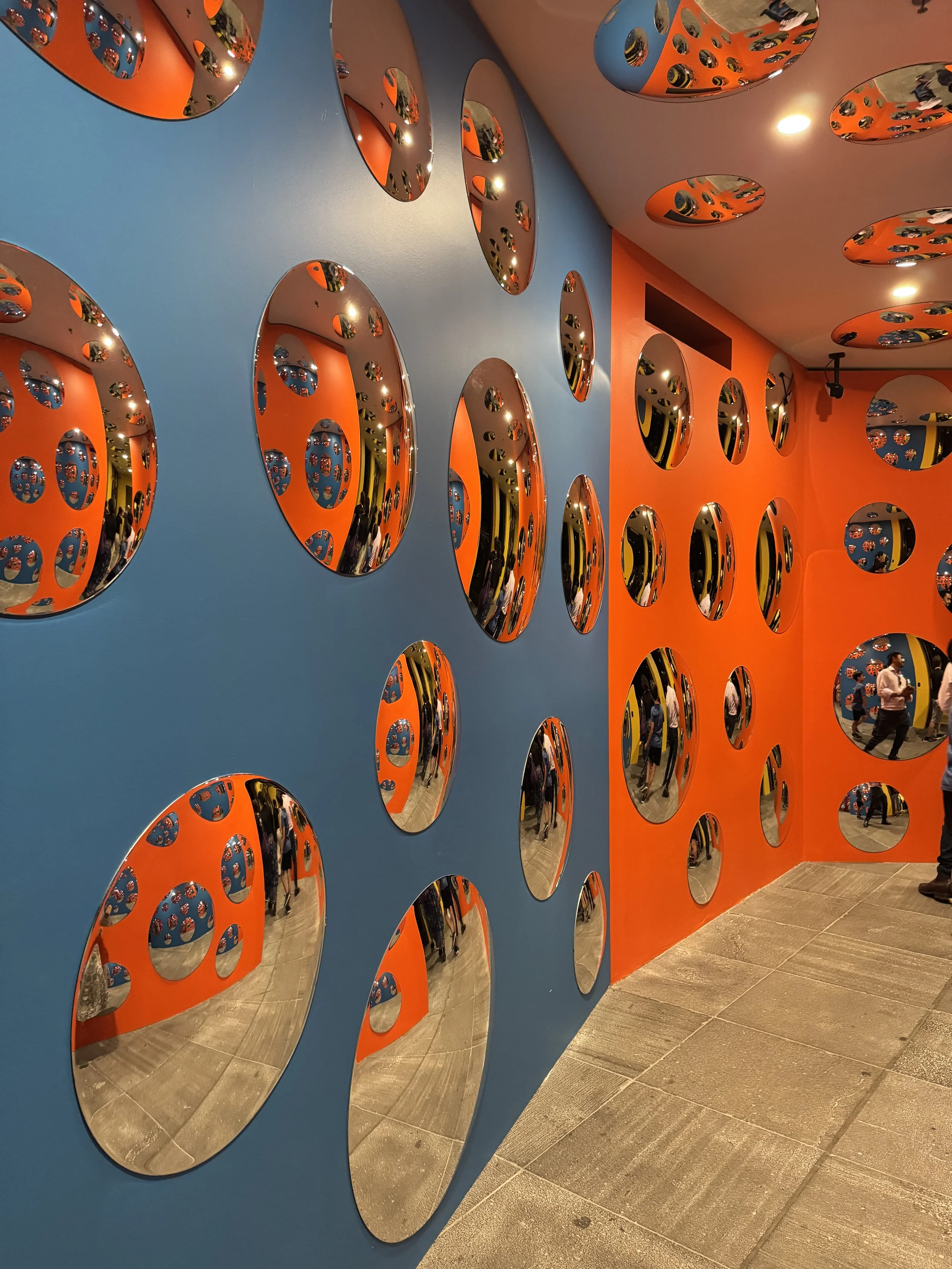
The Infinity Mirror Rooms were the highlight (and yes, I waited in line like a dedicated design pilgrim). You walk in, and suddenly you're part of the artwork. It’s immersive, a little disorienting, and completely beautiful. Mirrors are already magic in interiors—but Kusama uses them not just to reflect, but to multiply. Multiply light, pattern, presence. I left with a million ideas (and about as many photos).

Lessons for Interiors from Kusama
Commit to your concept. Kusama doesn’t hint at a theme—she lives it. That confidence can turn any space into a statement.
Play with scale. Tiny dots, towering pumpkins—size tells its own story.
Don’t be afraid to make it personal. Her art is deeply emotional, sometimes dark, but always honest. The best spaces feel the same.
Repetition is rhythm. In art and interiors, repeating an element creates harmony—even if that element is wild.
Final Thoughts (and One Big Mirror Ball)
Leaving the NGV, I felt creatively recharged—and a little like I’d been through a sparkly polka-dot baptism. Kusama reminded me that design should provoke something. Delight, curiosity, even disorientation. It’s not always about balance—it’s about impact.
So here’s to being a little bolder, a little braver, and maybe… bringing more dots into the living room?
Have you ever stood inside an artwork and felt completely seen? That’s Kusama. And if you ever get the chance—GO.